Introduction
In healthcare finance, payment reconciliation is the process of matching payment transactions with invoices, service records, claims, and accounting entries. It’s a critical activity that ensures financial accuracy, prevents errors, and supports compliance. However, traditional reconciliation systems often involve manual processes, disparate ledgers, and delayed data synchronization, resulting in inefficiencies, errors, and an administrative burden.
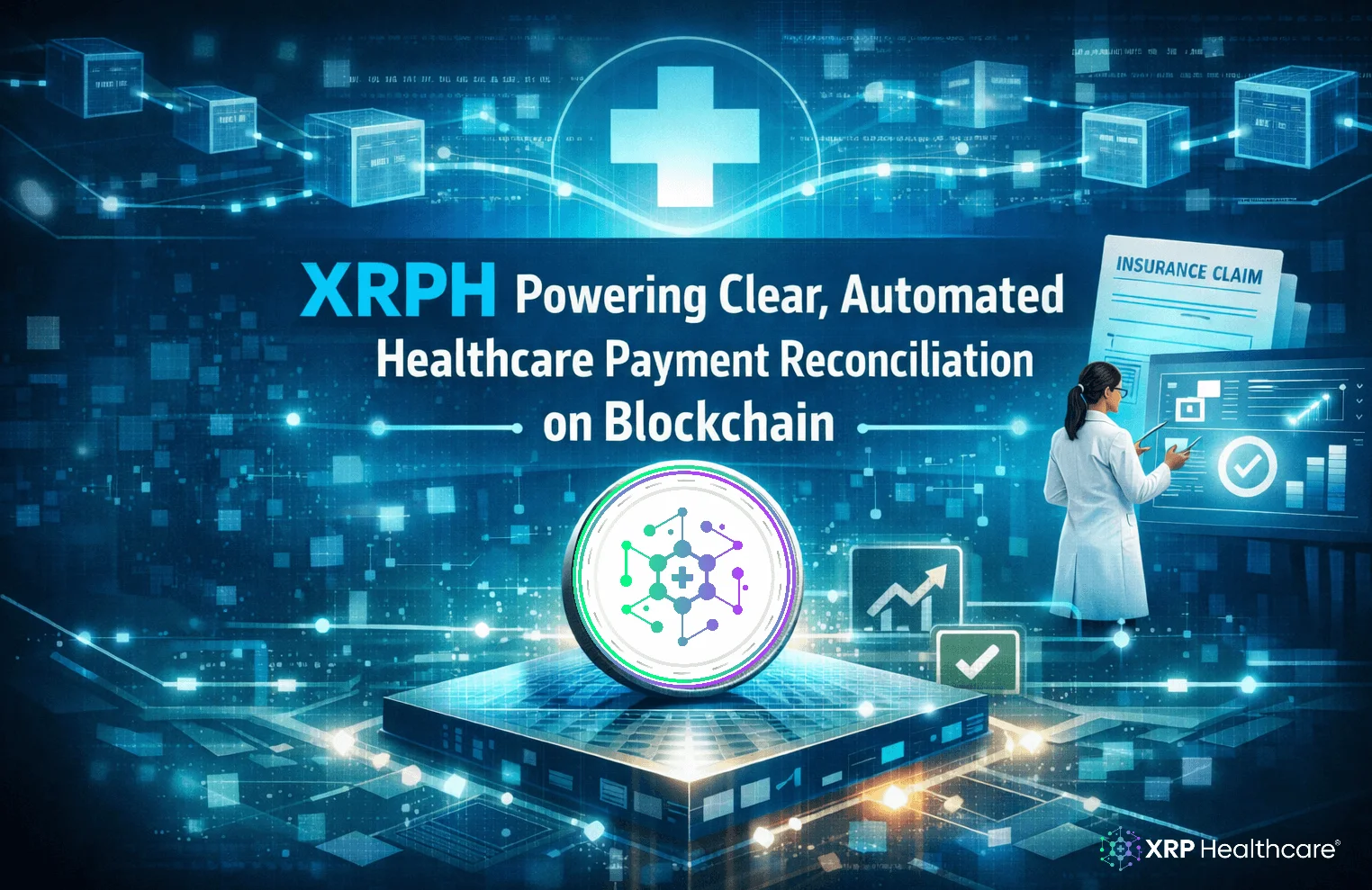
Blockchain technology, particularly through the XRPH token on the XRP Ledger (XRPL), provides a solution by introducing transparent and immutable transaction records that can streamline, automate, and enhance healthcare payment reconciliation. This article explains how XRPH supports reconciliation workflows, real-world use cases, and why healthcare organizations benefit from this blockchain-enabled approach.
Why Payment Reconciliation Is Vital in Healthcare
Healthcare payment reconciliation involves aligning multiple data points:
- Patient payments against service codes
- Insurance claims against provider invoices
- Supplier payments against delivery confirmations
When reconciliation fails or lags, organizations face:
- Financial discrepancies
- Delayed cash flow analysis
- Increased manual workload
- Compliance risk
According to healthcare finance research, reconciliation challenges are among the top contributors to administrative costs in healthcare operations. (Source: Healthcare Financial Management Association — https://www.hfma.org)
What Is the XRPH Token?
XRP Healthcare LLC issues the XRPH token on the XRP Ledger. Instead of serving as an investment asset, XRPH provides operational utility within healthcare financial systems, including payments, incentives, and transaction facilitation.
Key traits of XRPH:
- Utility-first design
- Fixed total supply
- Native XRP Ledger integration
- Supports wallet transactions and settlement workflows
Official XRPH resources:
🔹 https://xrphtoken.com/
🔹 https://www.xrphealthcare.ai/
The Role of Blockchain in Reconciliation
Blockchain, by design, records every transaction immutably, meaning once data is confirmed on the ledger, it cannot be altered. This has key benefits for reconciliation:
- Immutable records reduce mismatches
- Timestamped entries support audit trails
- Decentralized ledgers enable shared visibility across systems
For a broader context on how blockchain improves financial systems, see Investopedia – What Is Blockchain?
https://www.investopedia.com/terms/b/blockchain.asp
How XRPH Enhances Healthcare Reconciliation Workflows
Structured Transactions With Audit Trails
When XRPH is used to settle payments, each transaction includes a unique ledger entry, with metadata such as:
- Sender and receiver addresses
- Timestamps
- Transaction amounts
- Optional memo fields
These elements create a structured record that can be matched against internal billing systems or accounting software without manual cross-checking.
Reduced Manual Intervention
Traditional reconciliation often involves exporting reports from multiple systems, comparing them manually, and correcting discrepancies. With XRPH transactions stored on the XRP Ledger:
- Reconciliation becomes automated
- Manual matching is minimized
- Errors are reduced
- Accounting teams can focus on exceptions rather than routine reconciliation
This reduces administrative overhead significantly and accelerates financial closing cycles.
Wallet Integration for Seamless Matching
The XRPH Wallet supports secure non-custodial storage and transfer of XRPH and other XRPL assets. When healthcare applications integrate wallet transaction history with billing systems, reconciliation workflows become more seamless:
- Transaction references can be programmatically matched
- Providers can automate synchronization with internal ledgers
- Audit logs remain transparent and immutable
More wallet details: https://xrphtoken.com/
Real-World Use Cases in Healthcare
Patient Billing Reconciliation
Patients make payments for outpatient visits, procedures, and lab services. When payments are settled with XRPH, each transaction on the XRP Ledger matches internal billing records.
Insurance Claim Settlements
Claims processed and paid by insurers often require reconciliation with provider billing data. XRPH-powered payments streamline this by providing an immutable payment path that corresponds directly to claim references.
Supplier and Vendor Payments
Pharmaceutical distributors, medical equipment suppliers, and external service vendors can be paid with XRPH. Blockchain-recorded settlements simplify reconciliation between provider payout records and supplier ledgers.
Cross-System Interoperability and Reconciliation
A major challenge in reconciliation arises when financial systems are siloed. Blockchain’s decentralized ledger allows multiple systems (e.g., hospital billing software, insurance platforms, supplier accounting systems) to view the same transaction source of truth.
This shared view eliminates common reconciliation mismatches caused by:
- Time zone processing differences
- Version drift between ledgers
- Duplicate transactions
- Manual entry errors
This interoperability reduces reconciliation errors and accelerates financial workflows.
Security and Compliance Benefits
Blockchain enhances transparency and immutability, which also supports compliance initiatives. However, it is crucial to note that blockchain does not replace regulated data protection frameworks like HIPAA. Instead, XRPH supports payment data reconciliation without exposing sensitive health records. Cross-system reconciliation benefits from transparent ledgers while still conforming to privacy and compliance protocols.
For wider insights into blockchain in healthcare finance, refer to Blockchain Research in Healthcare:
https://arxiv.org/abs/1812.02776
Conclusion
Reconciliation is a backbone process for accurate healthcare finance. The XRPH token, operating on the XRP Ledger (XRPL), supports more efficient reconciliation workflows by providing structured, immutable, and auditable payment records. With reduced manual intervention, seamless wallet integration, and shared transaction visibility, XRPH helps healthcare organizations accelerate reconciliation cycles, improve financial accuracy, and reduce administrative overhead. As healthcare systems continue to digitalize their financial workflows, blockchain-enabled reconciliation, powered by XRPH, offers a practical, scalable, and transparent solution that aligns with modern operational needs.