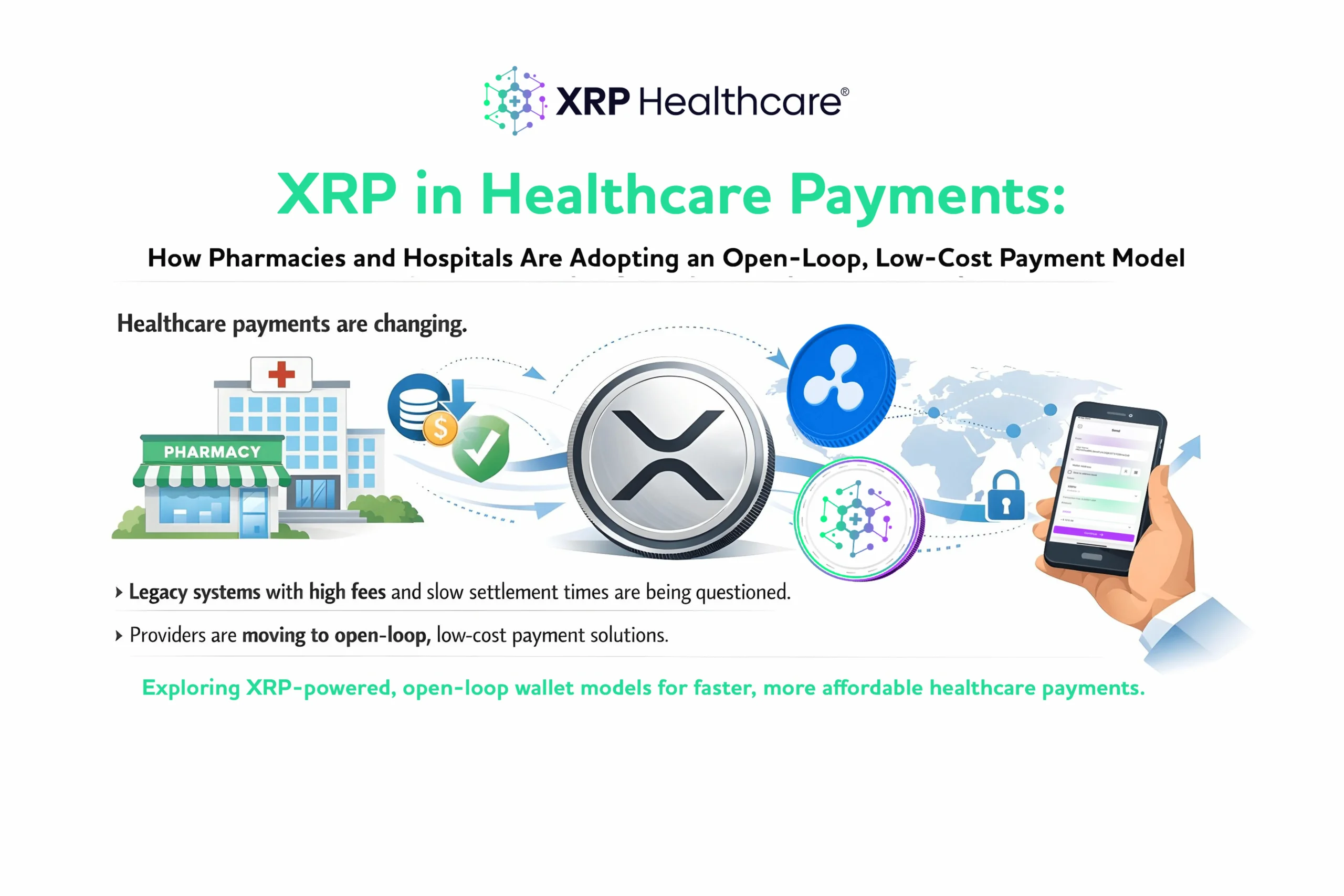
Healthcare payments are changing.
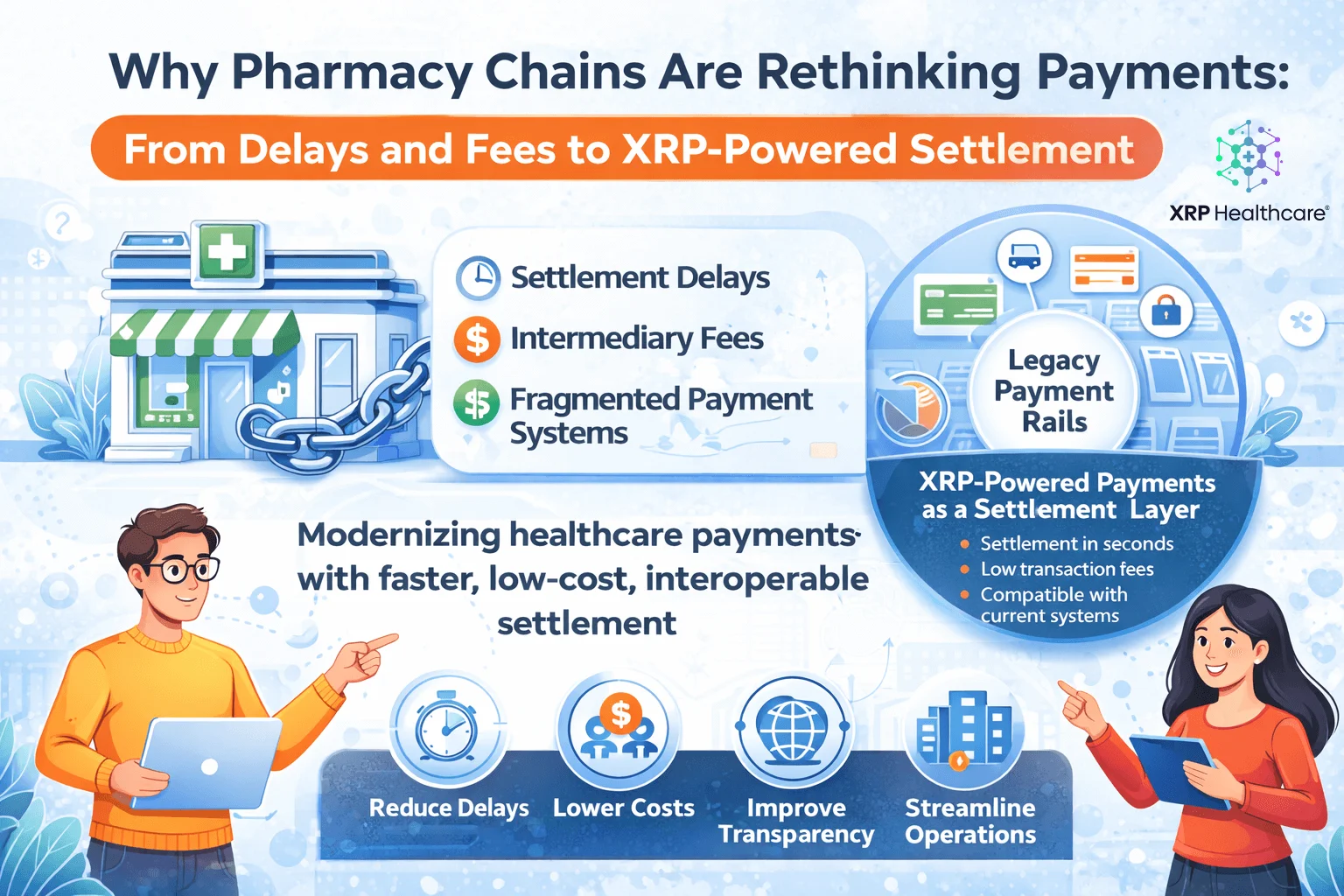
Across the United States and beyond, pharmacies and hospitals are increasingly questioning whether legacy payment systems, built decades ago, still make sense in a modern healthcare environment. Businesses no longer accept high fees, closed networks, long settlement times, and restrictive contracts.
Instead, a growing number of providers are exploring XRP-powered healthcare payments through an open-source, open-loop wallet model that offers a fundamentally different way of moving money.
Why Healthcare Providers Are Re-thinking Payments
Many pharmacies and hospitals face payments as one of their largest hidden cost centres. Traditional systems typically involve:
- Multiple intermediaries
- Percentage-based transaction fees
- Long settlement cycles
- Closed-loop networks
- Multi-year contractual lock-ins
These constraints reduce flexibility and directly impact cash flow, especially for independent pharmacies and regional hospital networks. As margins tighten, providers are looking for infrastructure, not promises. The Open-Loop Advantage: A New Way of Doing Things. An open-loop payment model means providers are not locked into:
- A single payment processor
- A proprietary network
- A fixed contract structure
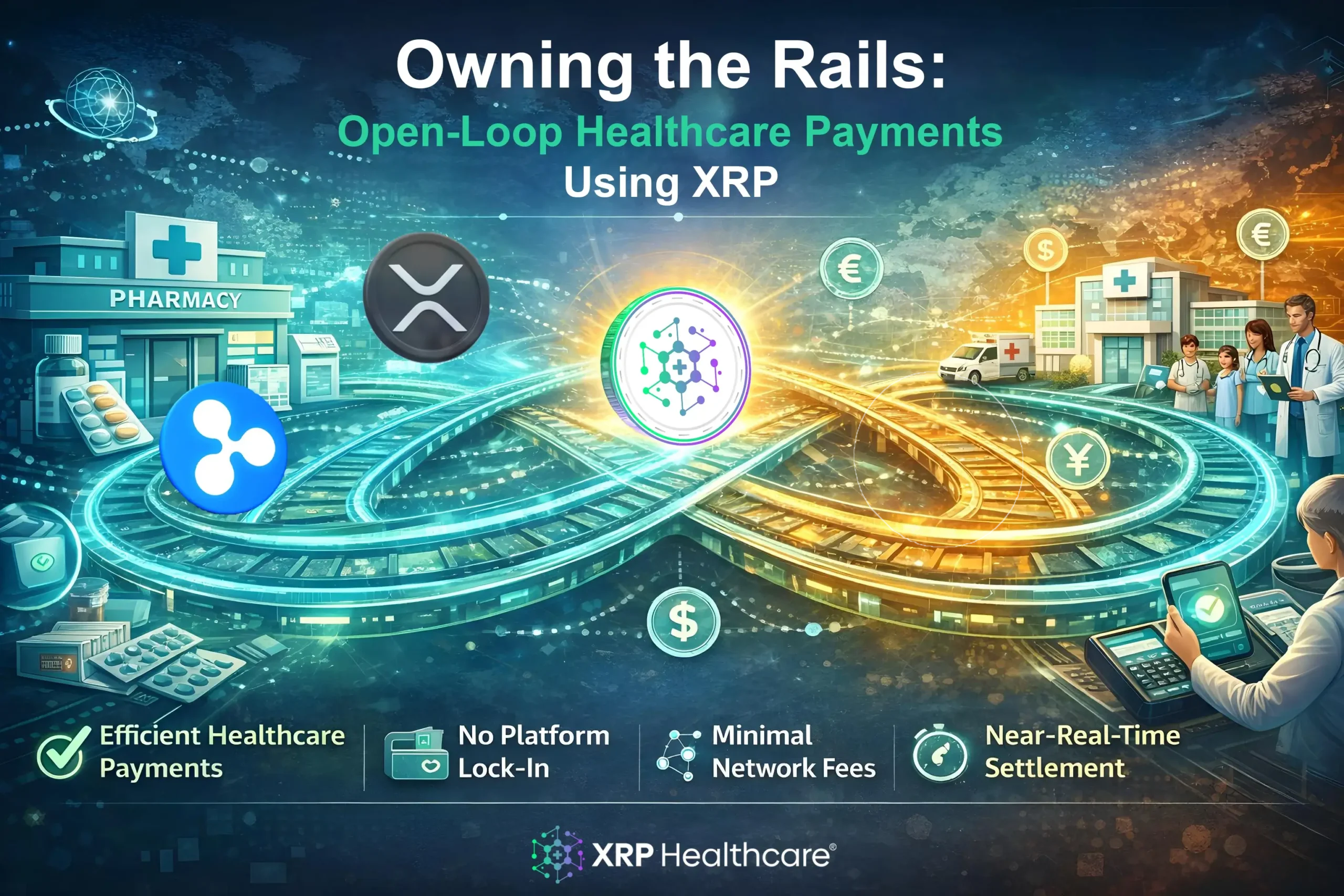
Instead, XRP-based healthcare payments allow value to move directly between parties, using open standards that can be adopted, adapted, or built upon.
This shift is not about replacing healthcare systems — it is about modernising the payments layer beneath them.
The XRPH Wallet: Open-Source by Design
To support this new model, XRP Healthcare LLC provides the XRPH Wallet, an open-source, non-custodial healthcare payment wallet.
Key characteristics:
- Open-source architecture
- No vendor lock-in
- No custody of provider funds
- No patient data stored or transmitted
- Designed for real-world healthcare workflows
This gives pharmacies and hospitals choice, not dependency.
Designed for Open Access, Not Lock-In
One of the most attractive aspects of the XRPH Wallet model is that it doesn’t require long-term contracts, exclusive processor agreements, forced intermediaries, or proprietary lock-ins.
Healthcare providers can:
- Use the XRPH Wallet directly
- Build their own internal wallet or integration
- Experiment without committing to a closed ecosystem
This flexibility is increasingly important as healthcare organisations modernise incrementally rather than through disruptive overhauls.
Real Cost Savings for Pharmacies and Hospitals
While savings vary by size and payment volume, providers consistently identify improvements in:
- Transaction fees compared to card networks
- Settlement speed and cash-flow access
- Administrative overhead
- Cross-border payment friction
- In practical terms, this can mean:
- Faster access to working capital
- Lower per-transaction costs
- Simplified reconciliation
For healthcare operators, these efficiencies compound over time.
How Pharmacies and Hospitals Can Participate
Healthcare providers have two clear options:
1️⃣ Use the XRPH Open-Source Wallet
Providers can adopt the XRPH Wallet directly to begin accepting XRP-powered healthcare payments.
2️⃣ Build Their Own Solution
Because the wallet is open source, organisations are free to build their own internal payment layer using the same architecture.
👉 Participation details and technical overview:
https://xrphtoken.com/how-xrp-in-healthcare-works
External Context: Why This Matters Now
The healthcare sector is not alone in modernising payments. Financial institutions globally are already using XRP for fast, low-cost settlement in regulated environments. For broader context on XRP’s role in payments infrastructure, see:
👉 https://xrpl.org/
Healthcare is now applying those same principles to its own payment challenges.
A Payments Layer, Not a Clinical System
To be clear:
- The XRPH Wallet is payments-only
- No clinical data is involved
- No patient health information is stored
- No diagnosis or care decisions occur
This separation allows healthcare providers to modernise payments without disrupting medical systems or compliance frameworks.
Frequently Asked Questions (FAQs)
What does “open-loop” mean in healthcare payments?
It means providers are not locked into a single proprietary network or contract and can choose how they integrate or build payment solutions.
Is the XRPH Wallet mandatory?
No. Providers can either use the XRPH Wallet or build their own solution using the open-source framework.
Are contracts required?
No. There are no long-term contracts required to explore or adopt the XRPH Wallet model.
Does this store patient data?
No. The XRPH Wallet does not store or transmit patient health information.
Is this suitable for hospitals as well as pharmacies?
Yes. The architecture is designed to scale across pharmacies, clinics, and hospital environments.