Introduction
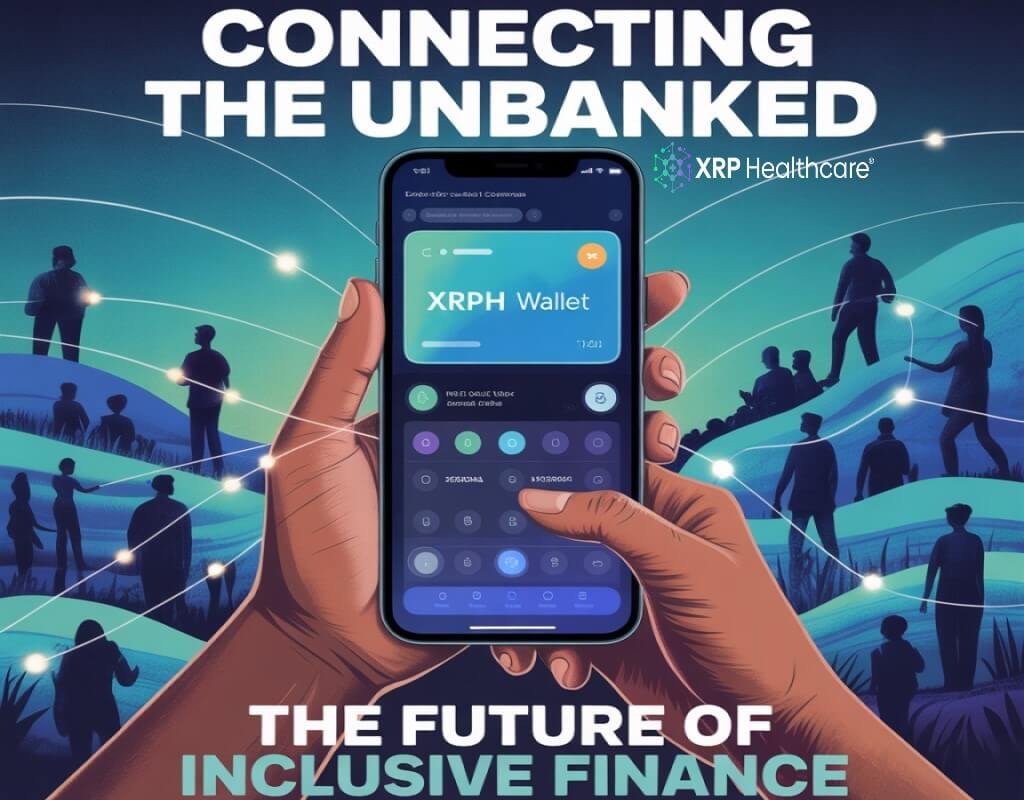
Across the world, millions remain unbanked or underbanked, especially in remote areas where traditional banking infrastructure is scarce. The XRPH Wallet, powered by the XRP Ledger (XRPL), offers a solution that merges speed, affordability, and transparency, unlocking access to financial tools that can transform communities and healthcare systems alike.
The Challenge of Financial Exclusion
In many developing regions, individuals lack access to secure payment systems, making it difficult to pay for healthcare, education, or essential services.
Traditional banks often avoid rural areas due to high operational costs and limited profitability.
As a result, people depend on cash-based transactions, which are inefficient, risky, and prone to fraud. This financial divide has a direct impact on economic growth and public health systems.
External Source: According to the World Bank, over 1.4 billion adults globally remain unbanked as of 2023.
XRPH Wallet: Bridging the Gap Through Blockchain
The XRPH Wallet leverages the XRP Ledger’s (XRPL) fast, low-cost transactions to bring digital financial access to underserved regions.
Unlike traditional systems, the XRPL operates without intermediaries, allowing anyone with a smartphone and internet access to store, send, and receive value instantly.
Key benefits include:
- Near-zero transaction fees, enabling micro-payments.
- Instant settlement, supporting time-sensitive healthcare payments.
- Secure and transparent records, ensuring accountability in aid distribution.
This decentralized design gives users direct control over their funds, a major step toward true financial empowerment.
External Source: Learn more about XRPL’s global payment capabilities at xrpl.org.
Supporting Healthcare and Local Economies
Beyond personal transactions, the XRPH Wallet has the potential to strengthen community healthcare systems.
By integrating blockchain-based payment channels, local clinics and pharmacies can receive direct, traceable payments from NGOs, donors, and insurance providers, minimizing corruption and ensuring funds reach their destination.
Additionally, local merchants and small businesses can accept XRPH payments, creating a self-sustaining financial ecosystem that promotes growth and innovation in regions previously excluded from global finance.
Why XRPH Wallet Stands Out
Several factors make the XRPH Wallet uniquely positioned for financial inclusion:
- Built on the XRPL: An energy-efficient, carbon-neutral blockchain with proven scalability.
- Affordable Access: Micro-transactions make it usable even for low-income communities.
- Healthcare Integration: Designed to bridge healthcare and finance for real-world utility.
- User-Centric Design: Simple interface tailored for both individuals and organizations.
These qualities allow XRPH to serve as a bridge between blockchain technology and social progress, not just a financial tool, but a catalyst for empowerment.
Conclusion
The XRPH Wallet is redefining how remote communities access and manage money.
By combining blockchain’s security and transparency with financial accessibility, it provides the foundation for a more inclusive digital economy.
In a world striving for equality, XRPH stands as a model for how technology can bring opportunity, trust, and financial freedom to those who need it most.