Introduction
Pharmacies around the world are under increasing pressure to optimize operations, reduce financial friction, and deliver better value to patients. Enter the XRPH Wallet, a blockchain-powered payment solution built on the XRP Ledger (XRPL), which is reshaping how pharmacies accept payments, manage cash flow, and connect to a broader healthcare ecosystem.
What Is the XRPH Wallet?
Non-Custodial, Secure Payments
The XRPH Wallet is a non-custodial wallet built by XRP Healthcare LLC, allowing users to hold their own private keys and transact directly on the XRP Ledger. (XRP Healthcare LLC)
Because the wallet is non-custodial, no personal health information (PHI) is stored on XRPH servers. (XRP Healthcare LLC)
Multi-Token Support
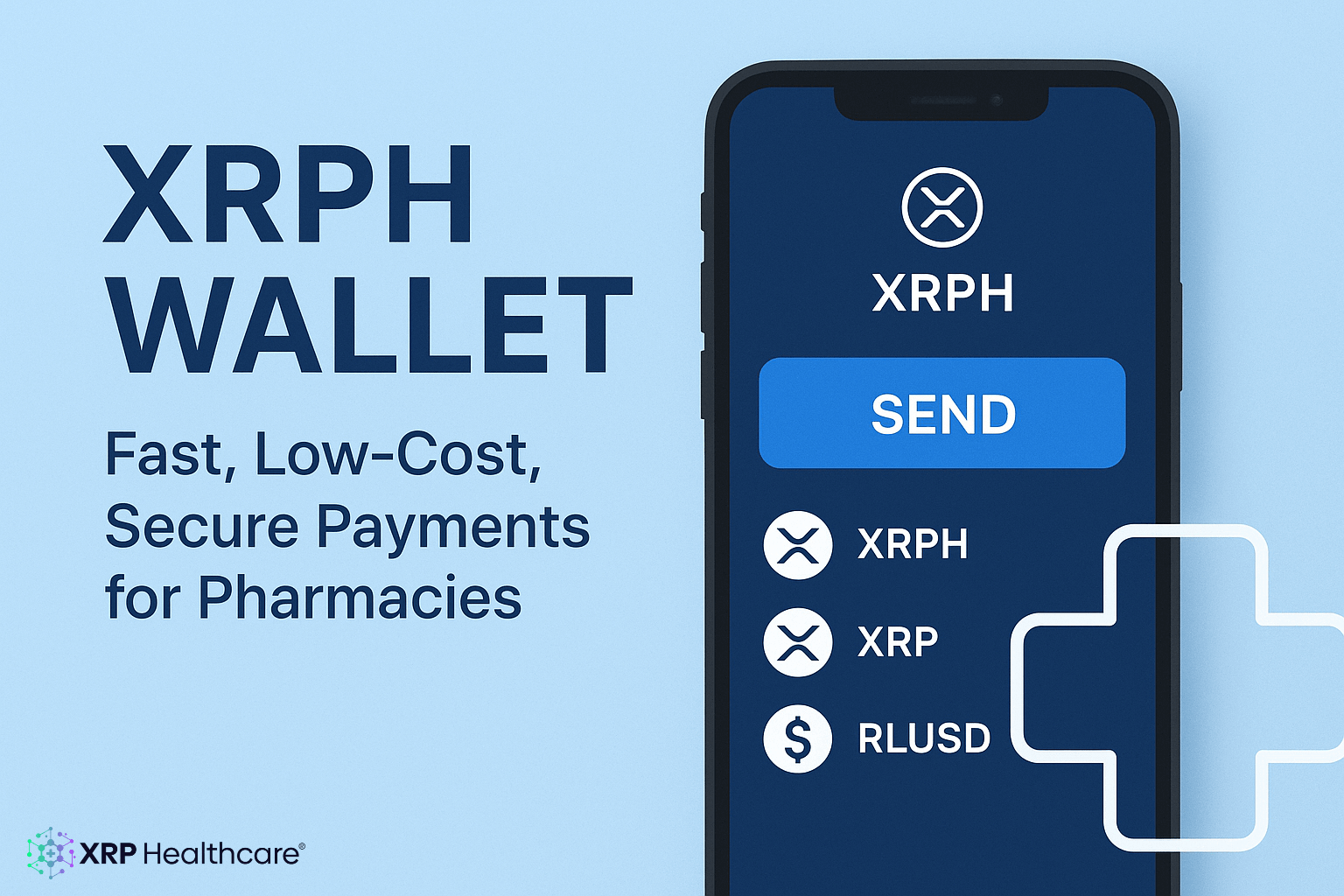
The wallet supports:
- XRPH — the native healthcare utility token;
- XRP — liquidity token;
- RLUSD — a USD-pegged stablecoin on XRPL. (XRP Healthcare LLC)
This flexibility allows pharmacies to receive stable-value payments or token-based transactions depending on their needs.
Speed & Cost Efficiency
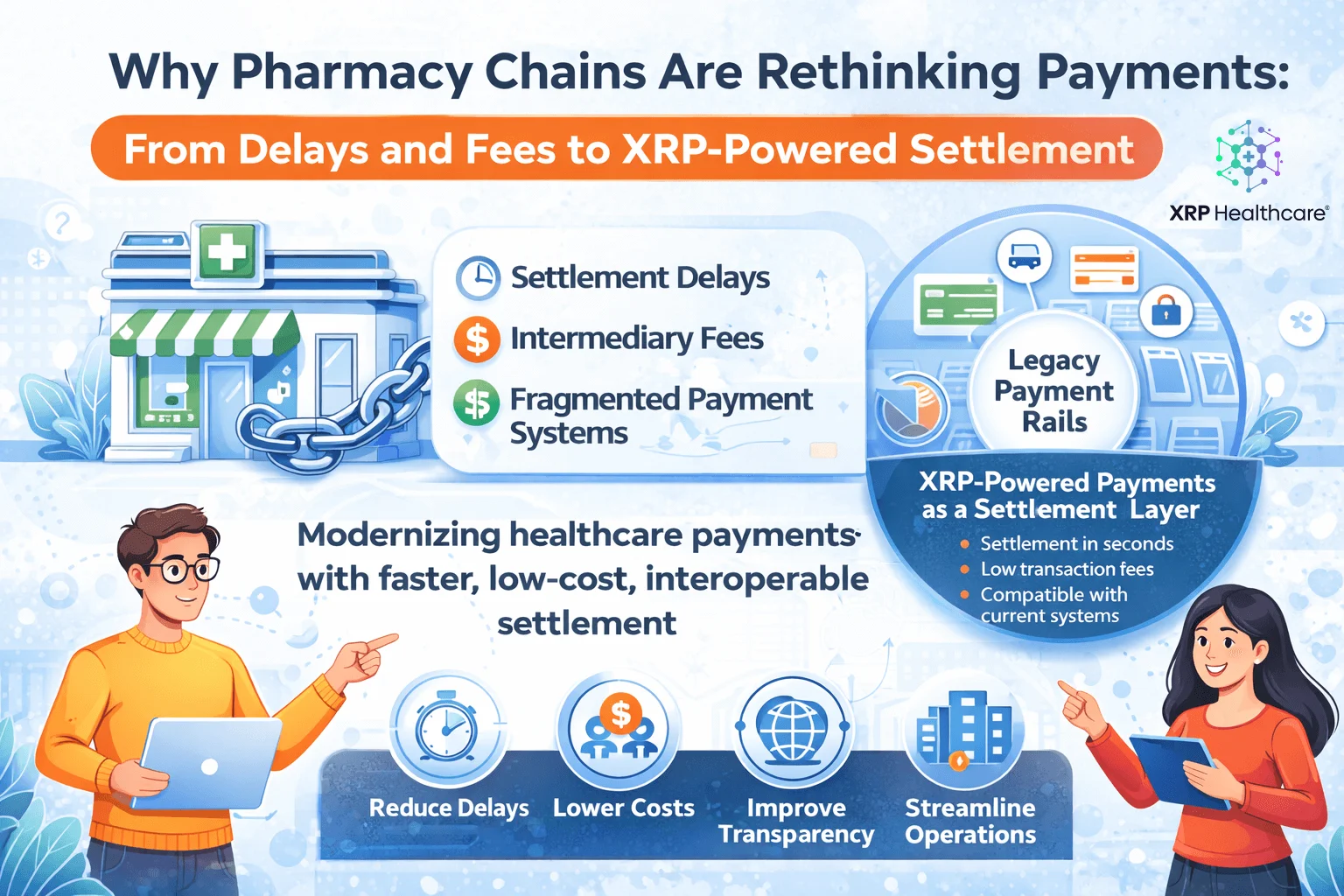
Transactions on XRPL settle in just 3–5 seconds, with network fees measured in drops (a tiny fraction of XRP), making payments nearly instantaneous and very low cost.
This efficiency delivers a major advantage over legacy banking rails like ACH or wire transfers.
How Pharmacies Are Deploying XRPH in Practice
1. Faster Reconciliation & Cash Flow
By accepting XRPH, XRP, or RLUSD, pharmacies can receive payments in real time — eliminating delays typical with traditional bank transfers.
This accelerates cash flow, reduces outstanding receivables (write-offs), and helps pharmacies manage liquidity more proactively.
2. Borderless Payments for Global and Local Use
Because the XRPH Wallet is built on the XRPL, it enables cross-border transactions without intermediaries.
Pharmacies connected to global healthcare networks, especially in markets like Africa, where XRP Healthcare is actively acquiring and integrating pharmacies, benefit from this seamless settlement. (XRP Healthcare®️)
In the company’s roadmap, XRPH and RLUSD are expanding their utility usage across their pharmacy network. (XRP Healthcare LLC)
3. Transparent, On-Chain Invoicing
Pharmacies can generate QR codes or invoices via the XRPH Wallet. (XRP Healthcare LLC)
When patients or healthcare sponsors pay, the transaction settles directly on-chain. This visibility improves financial transparency and simplifies bookkeeping.
4. Prescription Savings & Loyalty
Through the XRPH Prescription Savings Card (part of the XRPH AI App, a separate but related product), patients earn XRPH rewards while using their savings card at over 68,000 U.S. pharmacies, including big names like Walgreens, CVS, and Walmart. (XRP Healthcare®️)
This encourages repeat pharmacy visits and fosters deeper engagement within the XRPH ecosystem.
5. Cost Reduction & Operational Efficiency
By replacing traditional payment rails with XRPL-based payments, pharmacies reduce reliance on costly intermediaries and minimize transaction fees.
This not only lowers overhead but also helps pharmacy networks scale more sustainably.
A Bigger Picture: XRPH Wallet in the XRP Healthcare Ecosystem
Pharmacies don’t just use the wallet in isolation; they are part of a broader healthcare infrastructure that XRP Healthcare is building:
- Pharmacy Acquisitions & M&A: Through its affiliate (XRP Healthcare M&A Holding Inc.), the organization is acquiring pharmacies in Africa, modernizing operations, and integrating blockchain payments.
- AI-Driven Healthcare: The XRPH AI App (by XRP Healthcare) provides a multilingual, HIPAA-grade interface with tools like a prescription scanner, symptom capture, and the Savings Card.
- Token Utility & Roadmap: According to the roadmap, more pharmacies will be rebranded under the XRP Healthcare umbrella, and XRPH token usage will expand for both B2C (patients) and B2B (supplier) payments.
- Infrastructure Transparency: The open-source nature of the XRPH Wallet encourages pharmacies and even developers to build on top of the XRPL infrastructure.
Challenges & Considerations
While the XRPH Wallet offers clear benefits, there are important considerations:
- Regulation & Compliance: Pharmacies must comply with local healthcare regulations, anti-money laundering (AML) rules, and financial reporting requirements when accepting crypto payments.
- Volatility vs Stability: Depending on which token they accept (XRPH vs RLUSD), pharmacies may face volatility risk. RLUSD offers stability but may require on/off-ramps.
- Adoption Barrier: For many pharmacies, integrating a new payment system requires training, UI changes, and operational shifts.
- Liquidity Management: Pharmacies may need to manage liquidity in multiple tokens; converting XRPH or XRP to fiat could require on-ramp/off-ramp services.
The Impact: Why It Matters
- Improved Cash Efficiency: By cutting transaction time and fees, pharmacies improve their working capital and reduce reliance on credit.
- Global Financial Access: Pharmacies in underbanked regions can participate in a modern payment ecosystem without traditional banking infrastructure.
- Patient Engagement: The Savings Card and token rewards incentivize patients to frequent partner pharmacies, boosting retention.
- Scalability & Innovation: Through open-source tools and tokenized payments, pharmacies can become part of a scalable, cross-border healthcare payment network.
Conclusion
The XRPH Wallet is not just a digital wallet; it’s a transformational tool for pharmacy operations. By leveraging the speed, low cost, and transparency of the XRP Ledger, pharmacies can rethink how they manage payments, improve cash flow, and build stronger relationships with patients. As XRP Healthcare accelerates its global expansion, more pharmacies are likely to adopt XRPH-based payments, shaping a future where healthcare payments are instant, borderless, and efficient.