Introduction
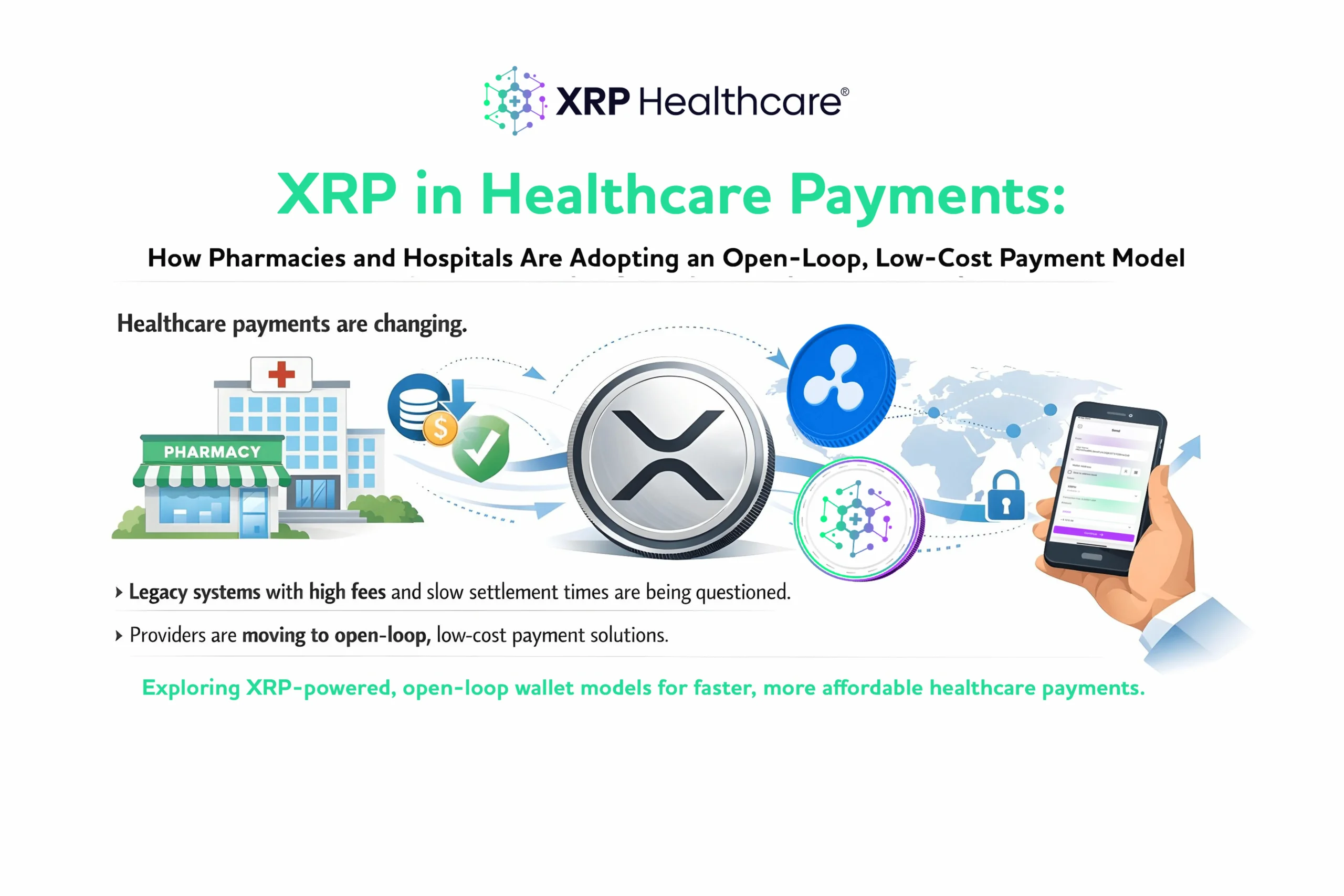
Hospitals and pharmacies are under constant pressure to modernise operations, yet payment infrastructure often remains unchanged. While clinical systems have evolved rapidly, the way money moves between providers, suppliers, and partners has lagged behind.
For many healthcare operators, the challenge is not a lack of innovation but a reluctance to disrupt workflows that already function.
The question being asked more frequently is:
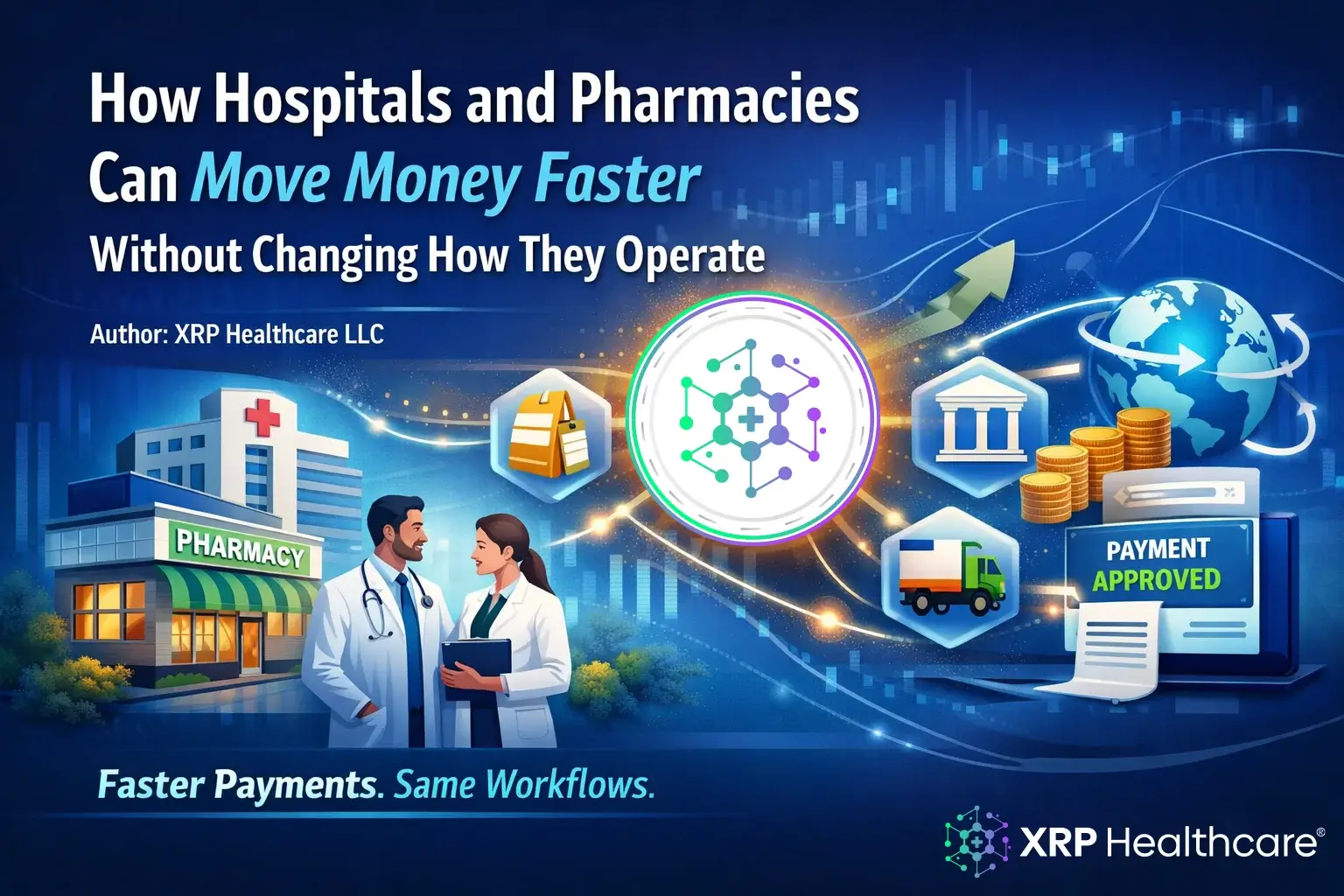
Can payments move faster without changing how hospitals and pharmacies operate day to day?
Increasingly, the answer lies in using XRP-powered settlement as an underlying payment rail, rather than as a replacement system.
Why Healthcare Payments Lag Behind Other Industries
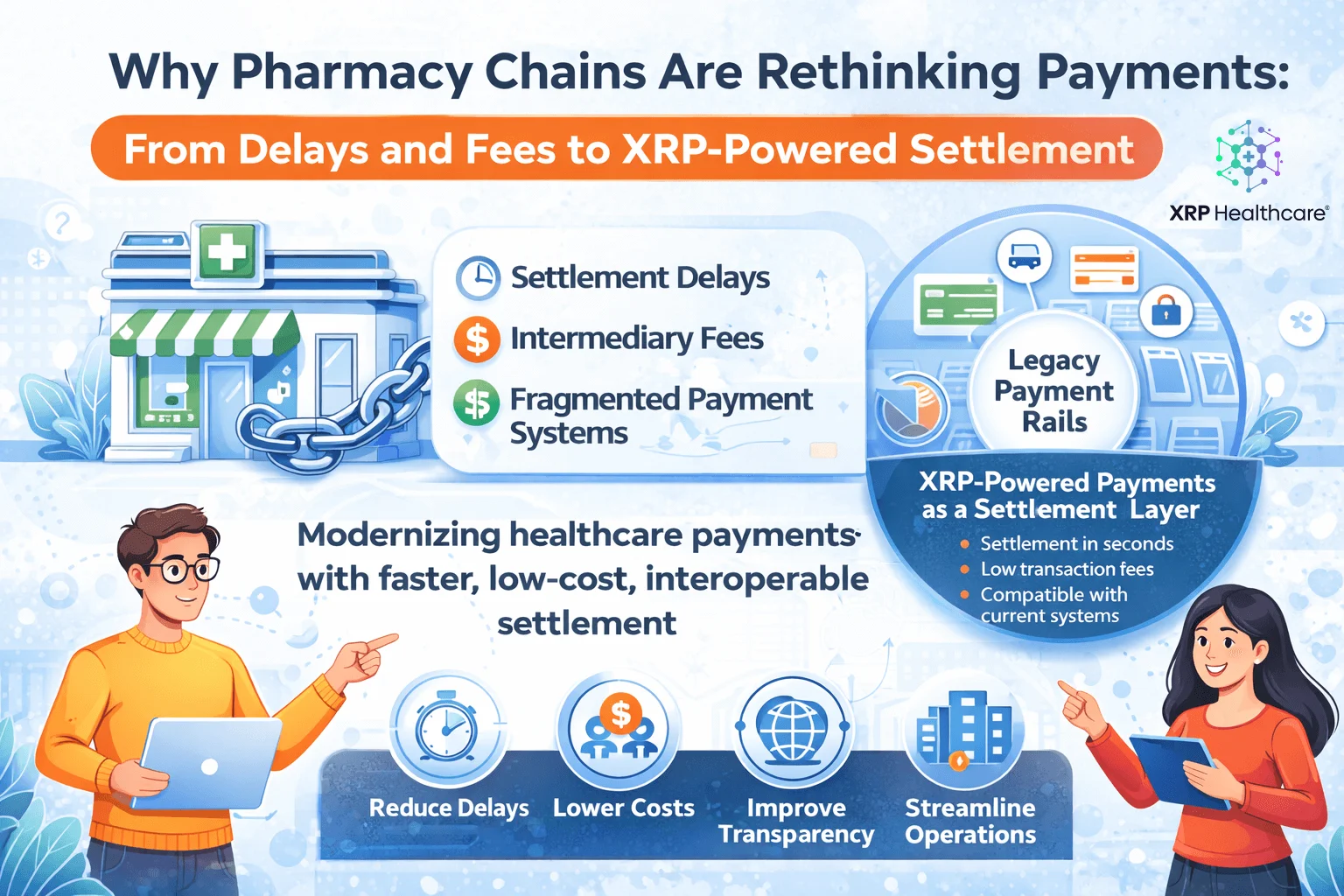
Healthcare payments involve multiple stakeholders, layered compliance requirements, and deeply embedded legacy systems. As a result, settlement delays are often treated as unavoidable.
Common challenges include:
- Multi-day settlement between hospitals and suppliers
- Manual reconciliation across departments
- Fees added at each intermediary stage
- Limited visibility into payment status
While other industries have moved toward real-time settlement, healthcare payments remain constrained by infrastructure designed for a different era.
The Myth of “Rip and Replace” Payment Systems
A common misconception is that adopting new payment technology requires replacing existing systems entirely.
In reality, modern payment infrastructure can operate beneath existing workflows.
Hospitals and pharmacies do not need to:
- Change billing software
- Replace accounting systems
- Retrain staff on new operational tools
Instead, they can adopt faster settlement rails that integrate seamlessly with current processes.
XRP as a Settlement Layer, Not a Workflow Overhaul
XRP-powered payments function as a settlement layer, enabling value to move quickly while existing systems continue to manage invoicing, reporting, and compliance.
Key benefits of XRP-based settlement include:
- Near-instant settlement
- Predictable transaction costs
- Open-loop architecture
- No custodial risk
This approach allows healthcare organisations to modernise payment speed without operational disruption.
For a deeper look at real-world applications, see our related article on
pharmacy chain payments using XRP.
Open-Loop Payments for Hospitals and Pharmacies
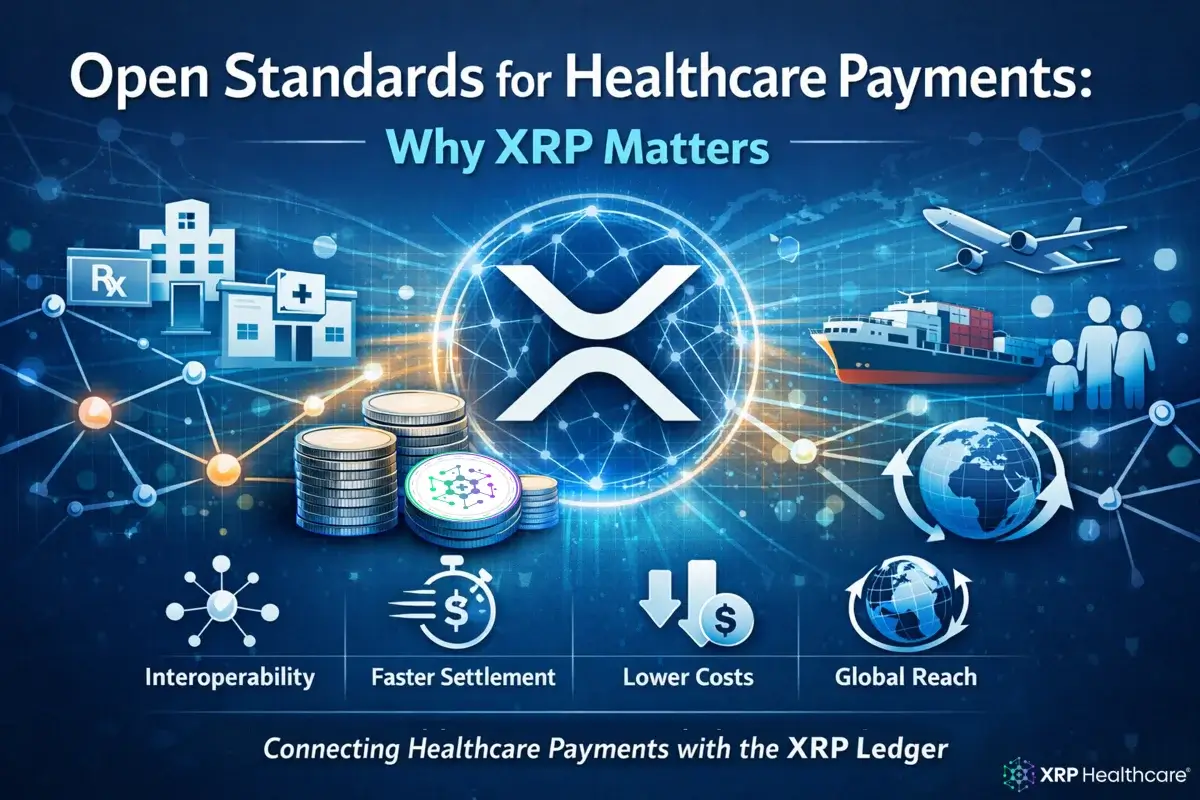
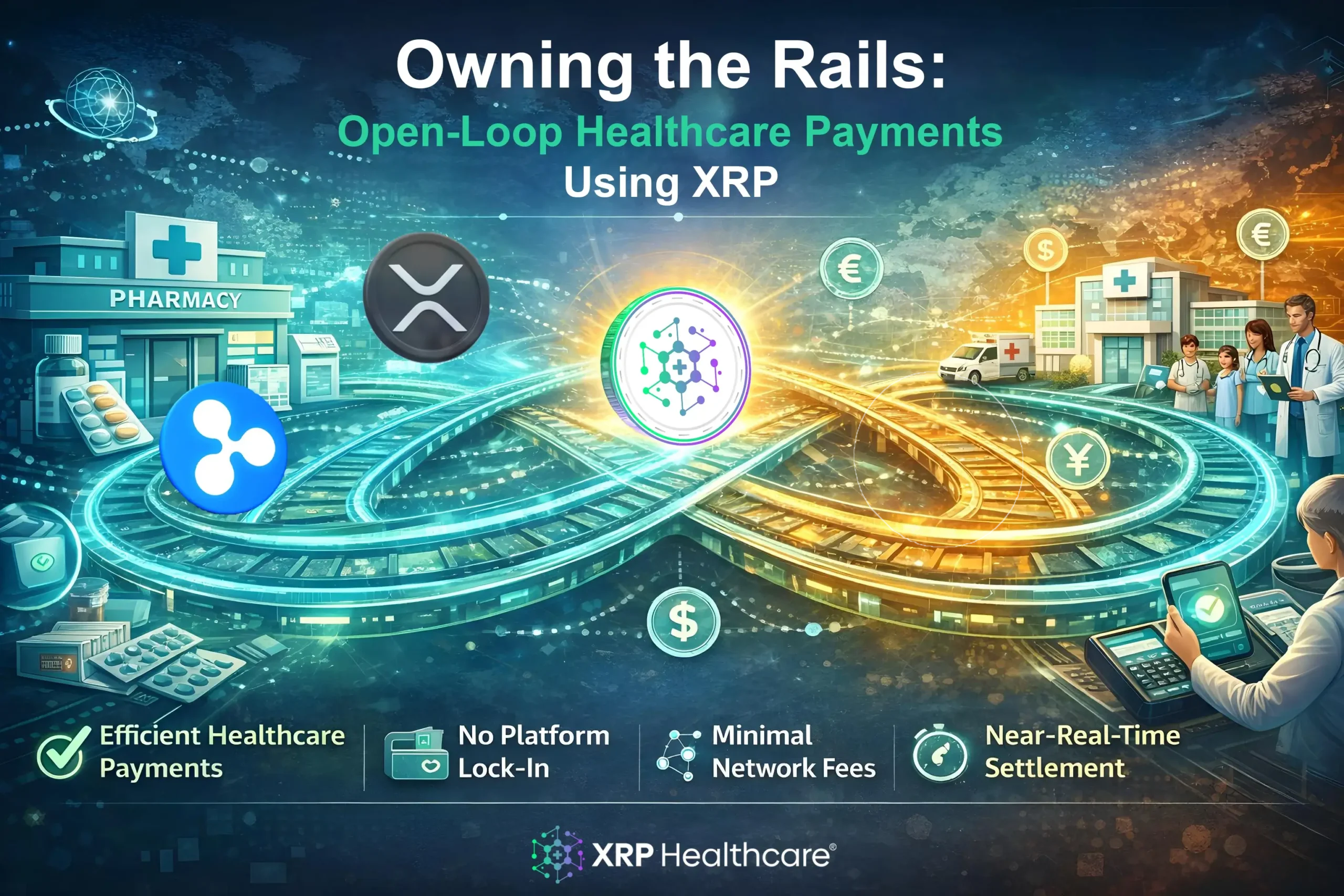
Unlike closed payment networks, open-loop settlement allows hospitals and pharmacies to interact with multiple counterparties without vendor lock-in.
XRP-based settlement supports:
- Hospital-to-supplier payments
- Pharmacy chain settlements
- Cross-border healthcare transactions
- Family- and patient-initiated payments
This flexibility is increasingly important as healthcare networks expand beyond national borders.
Faster Settlement Means Better Cash Flow
For hospitals and pharmacies, faster settlement is more than a technical improvement—it is a financial advantage.
Benefits include:
- Improved cash flow visibility
- Reduced reliance on short-term financing
- Faster supplier payments
- Simplified reconciliation
As transaction volumes grow, these efficiencies become increasingly meaningful.
XRP in Healthcare Payments: A Practical Infrastructure Shift
XRP in healthcare payments is not about replacing systems or introducing complexity. It is about improving the rails beneath existing operations.
When used as settlement infrastructure:
- No patient data is transmitted
- No custody of funds is required
- No proprietary lock-in is imposed
This makes XRP-based settlement a practical consideration for healthcare organisations seeking efficiency without disruption.
Conclusion
Hospitals and pharmacies are not seeking disruption, they are seeking efficiency.
By adopting faster settlement rails beneath existing systems, healthcare organisations can improve cash flow, reduce friction, and prepare for a more connected future.
XRP-powered settlement represents one approach aligned with these goals, offering speed and simplicity without operational upheaval.
Frequently Asked Questions
Can hospitals use XRP without changing existing systems?
Yes. XRP can operate as a settlement layer beneath current billing and accounting workflows.
Does XRP settlement require custody of funds?
No. Organizations can implement XRP-based payments in a non-custodial manner.
Is XRP suitable for healthcare payment infrastructure?
Healthcare and pharmacy payment providers increasingly evaluate XRP for its speed, cost efficiency, and open architecture.
Are patient records involved in XRP payments?
No. XRP settlement does not involve personal health information.
Can XRP support cross-border healthcare payments?
Yes. XRP enables fast, low-cost global settlement.