Introduction
Pharmacy chains operate within one of the most margin-sensitive sectors of healthcare. While much of the industry’s focus remains on supply costs, staffing pressures, and regulatory compliance, payment infrastructure continues to be an overlooked source of inefficiency.
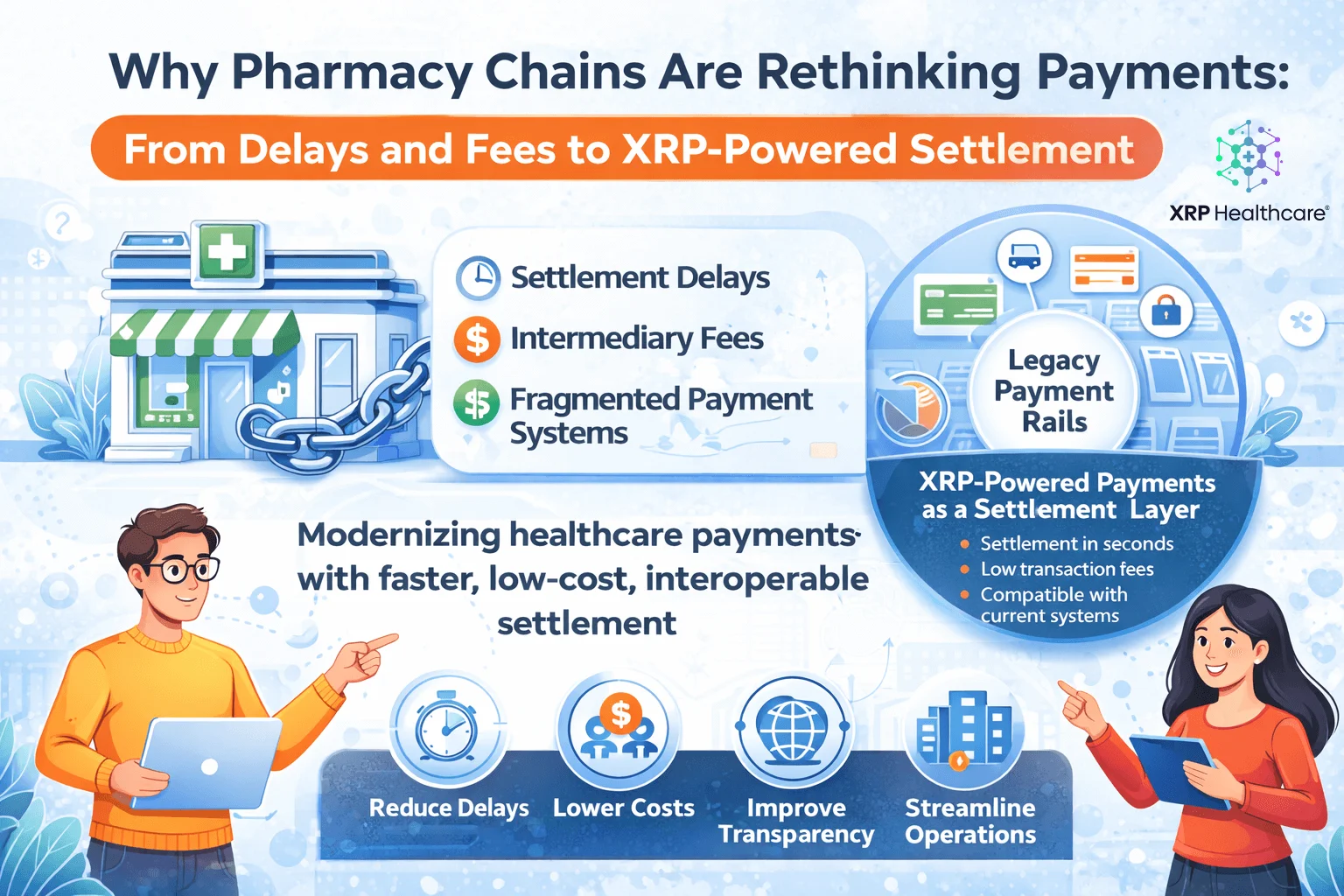
Settlement delays, intermediary fees, and fragmented payment rails quietly affect cash flow across pharmacies, hospital networks, and healthcare suppliers. As healthcare commerce becomes increasingly digital and global, many operators are reassessing whether legacy payment systems remain fit for purpose.
As a result, a growing number of pharmacy chains and healthcare organisations are now exploring XRP-powered settlement as a way to modernise payments without disrupting existing operations.
The Hidden Cost of Legacy Pharmacy Payment Systems
Most pharmacy chains continue to rely on payment rails designed decades ago. Developers did not build these systems for real-time settlement, multi-location healthcare networks, or cross-border supplier relationships.
Common challenges include:
- Delayed settlement between pharmacies, suppliers, and distributors
- Accumulated transaction and intermediary fees
- Complex reconciliation across multiple locations
- Limited transparency in cross-border transactions
While each issue may appear manageable in isolation, at scale, they create persistent inefficiencies that directly impact working capital, liquidity planning, and operational flexibility.
Why Settlement Speed Matters in Healthcare
In healthcare, time directly impacts liquidity.
Faster settlement enables pharmacies and hospitals to:
- Improve cash flow predictability
- Reduce reliance on short-term financing
- Pay suppliers and partners more efficiently
- Simplify financial operations across regions and locations
Unlike consumer retail, healthcare payments often involve multiple stakeholders across complex supply chains. Deterministic, near-instant settlement removes friction from an already intricate ecosystem.
XRP-Powered Payments as a Settlement Layer
XRP-powered payments introduce a fundamentally different approach to settlement.
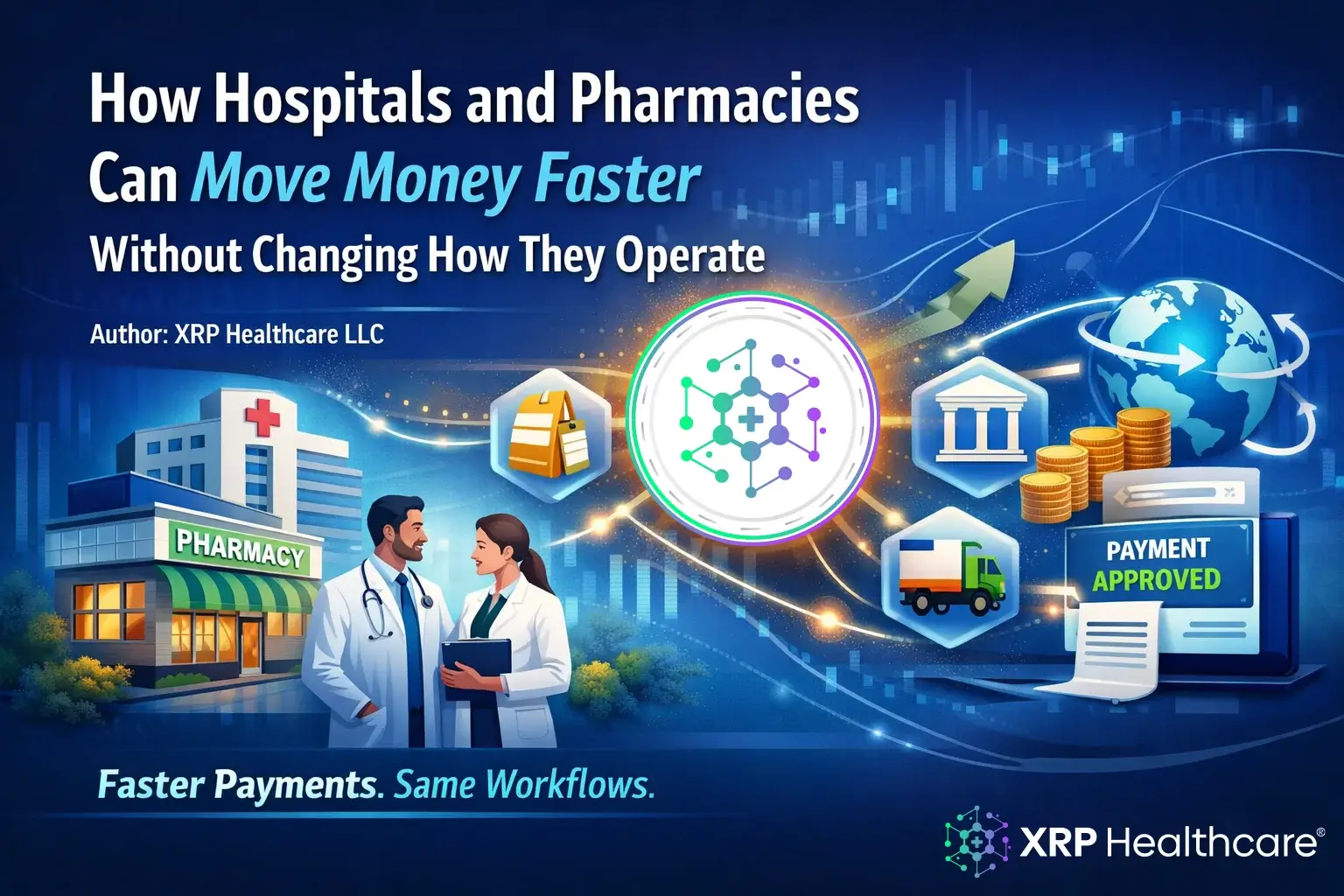
Rather than replacing existing payment systems, XRP can function as a settlement layer, enabling near-instant value transfer while existing invoicing, accounting, and compliance workflows remain unchanged.
Key characteristics include:
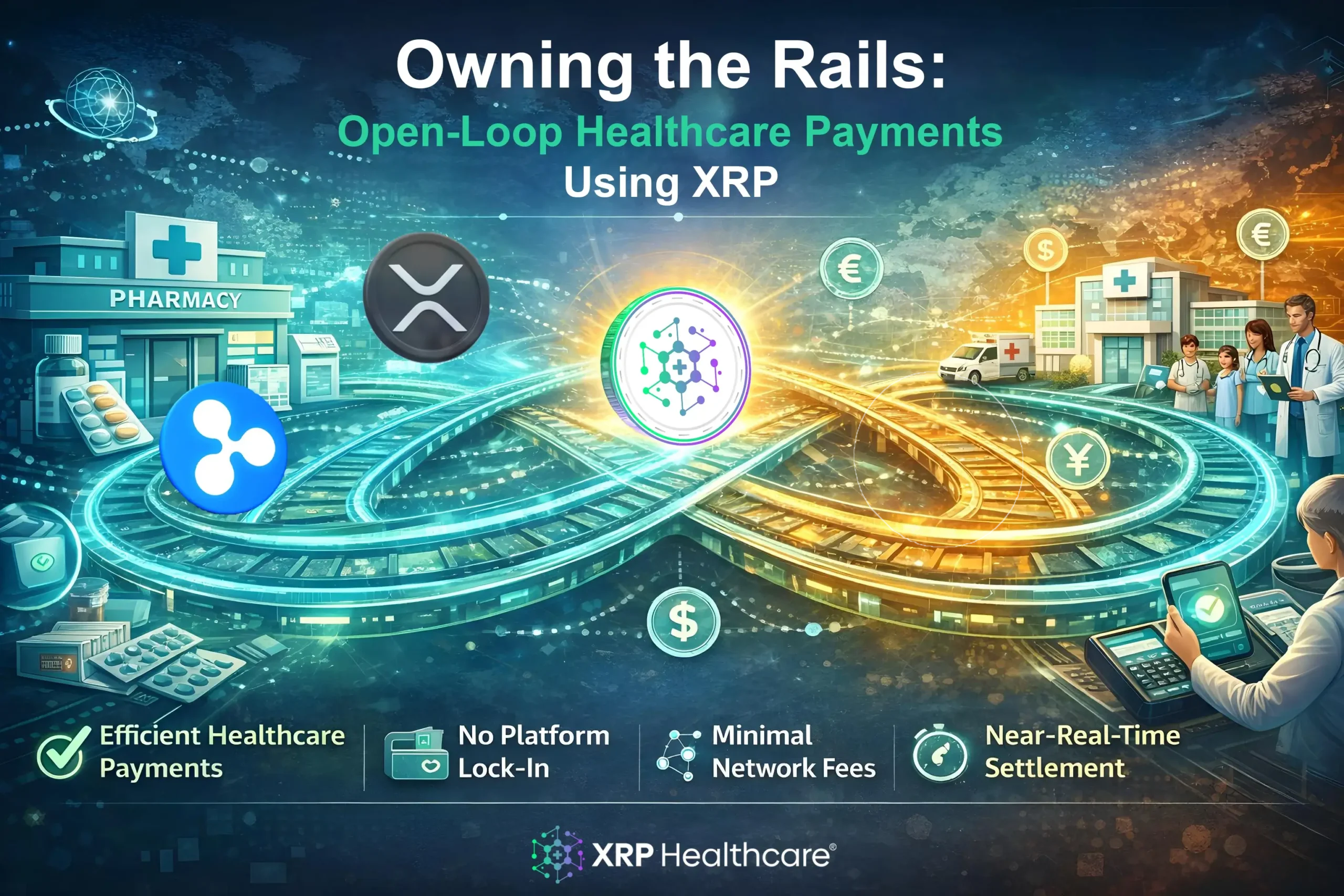
- Settlement in seconds rather than days
- Transaction fees are measured in fractions of a cent
- Open-loop payments without vendor lock-in
- Compatibility with pharmacy and hospital operations
This model prioritises efficiency beneath the surface rather than operational disruption.
A Modern Payment Rail for Healthcare Commerce
Healthcare payment infrastructure is evolving in the same way telecommunications and cloud computing once did—quietly and at the infrastructure layer.
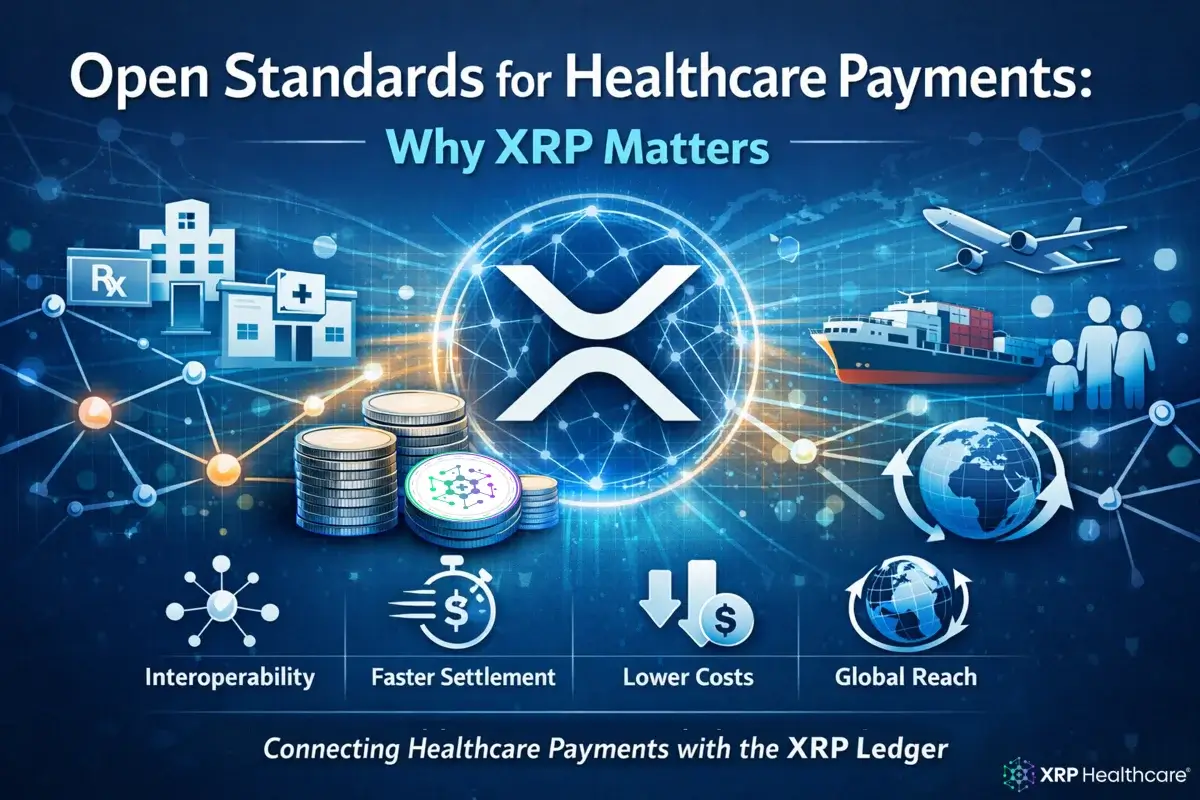
XRP-based settlement supports a wide range of healthcare transactions, including:
- Pharmacy chain payments
- Hospital-to-supplier transactions
- Cross-border healthcare payments
- Family and patient-initiated payments
As healthcare ecosystems become increasingly interconnected, modern payment rails are being viewed as essential infrastructure rather than optional innovation.
XRP in Healthcare: Practical, Not Speculative
The role of XRP in healthcare payments is not about speculation. It is focused on speed, certainty, and cost efficiency.
When used purely as a settlement mechanism:
- No patient health data is transmitted
- No custody of funds is required
- No proprietary system lock-in is introduced
This positions XRP-powered settlement as a pragmatic option for healthcare organisations seeking operational efficiency rather than experimental technology adoption.
What This Means for Pharmacy Chains and Hospitals
As healthcare payment volumes increase and margins continue to tighten, pressure to modernise payment infrastructure will only intensify.
Pharmacy chains and hospitals that proactively evaluate faster settlement options are better positioned to:
- Reduce operational friction
- Improve financial resilience
- Scale efficiently across regions and supplier networks
XRP-powered settlement represents one of several emerging approaches—but one increasingly aligned with the realities of modern healthcare commerce.
Conclusion
Healthcare payment infrastructure is undergoing a quiet but significant transformation. As pharmacy chains and hospitals reassess how money moves through their operations, faster settlement and lower friction are becoming strategic priorities.
XRP-powered settlement offers a practical path toward greater efficiency, transparency, and scalability—without requiring operational upheaval or system replacement.
Frequently Asked Questions
What is XRP in healthcare payments?
XRP can be used as a settlement layer to enable fast, low-cost value transfer for healthcare-related payments without replacing existing systems.
Can pharmacies use XRP without changing their workflows?
Yes. XRP-based settlement can operate alongside existing invoicing, accounting, and compliance processes.
Is patient data involved in XRP payments?
No. XRP settlement does not transmit or store personal health information.
Are XRP payments suitable for pharmacy chains?
They are particularly relevant for multi-location pharmacy chains seeking faster settlement and lower transaction costs.
Is XRP only used for cryptocurrency transactions?
No. Organizations are increasingly evaluating XRP as infrastructure for real-world payment settlement, including healthcare use cases.