Introduction
The XRPH token is a utility token designed to support real-world healthcare transactions by leveraging the XRP Ledger (XRPL), a decentralized blockchain built for fast, low-cost financial settlement. To understand how XRPH functions in practice, it is essential to explore how it operates on the XRP Ledger, how transactions are validated, and why this architecture supports scalable, transparent, and secure payments.
This article explains the technical and design elements of XRPH on XRPL, real use interactions, and why healthcare organizations can benefit from this blockchain-based infrastructure.
What Is the XRP Ledger?
The XRP Ledger (XRPL) is a purpose-built blockchain designed for payments and decentralized finance workflows. It utilizes a unique consensus algorithm called the Ripple Protocol Consensus Algorithm (RPCA), which enables transactions to settle rapidly without requiring energy-intensive mining.
Key characteristics include:
- Fast settlement times: Transactions typically finalize in 3–5 seconds
- Low transaction cost: Minimal network fees
- High throughput: Can process many transactions per second
- Decentralized consensus: Independent validators confirm transactions
The official XRPL documentation provides comprehensive technical details: https://xrpl.org/
What Is the XRPH Token?
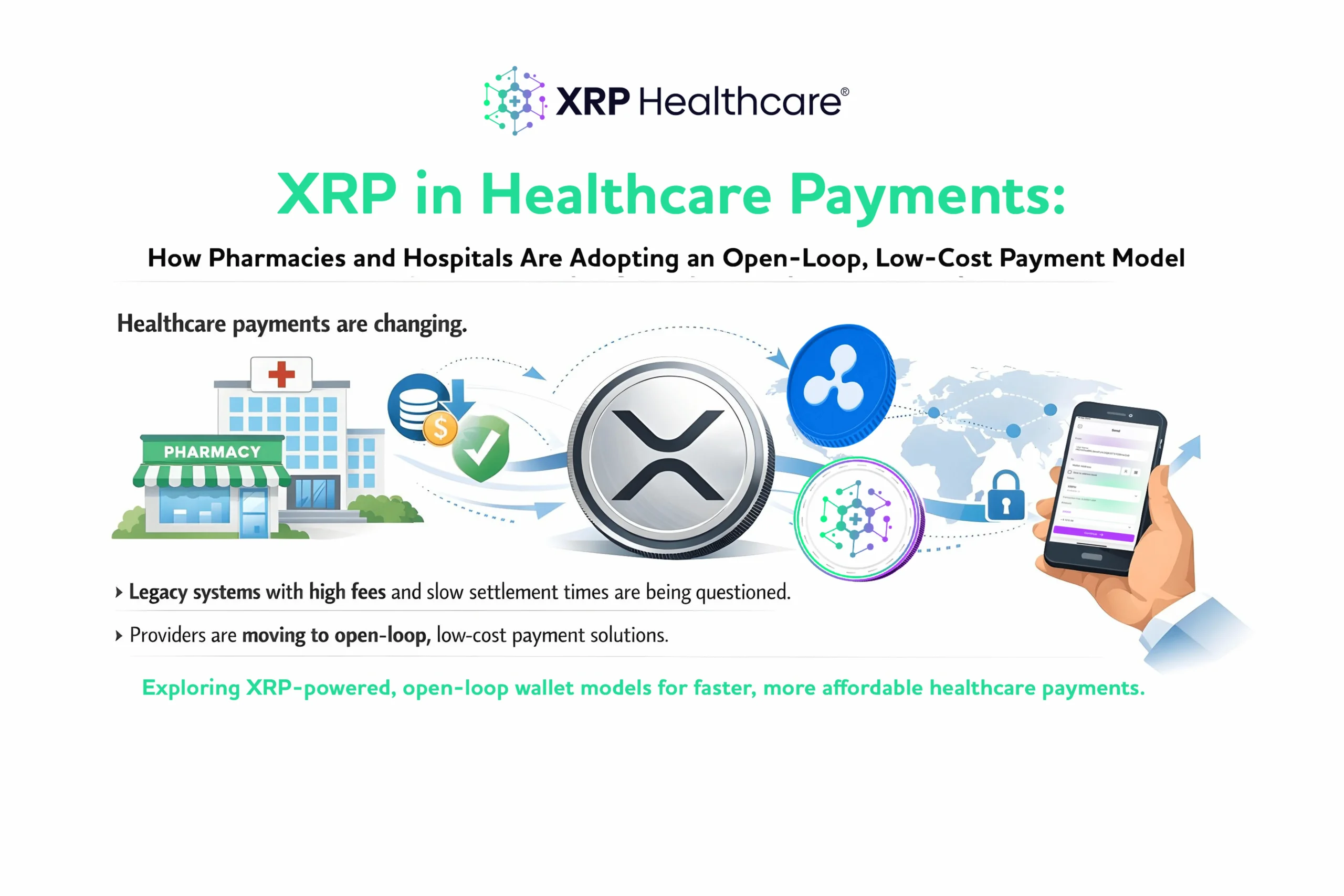
XRP Healthcare LLC issues the XRPH token as a utility token on the XRP Ledger. The token’s purpose is to facilitate real-world utility in healthcare payments rather than speculative trading.
Unlike some other tokens that operate on smart contract platforms with separate virtual machines, XRPH operates natively on the XRP Ledger, inheriting the network’s core properties and settlement mechanics.
Official XRPH resources:
🔹 https://xrphtoken.com/
🔹 https://www.xrphealthcare.ai/
How the XRP Ledger Records XRPH Transactions
Decentralized Validation
When a user broadcasts an XRPH transaction—such as a provider payment, patient billing settlement, or supplier invoice transfer—the XRP Ledger network receives it. Independent validators on the network evaluate and agree on the transaction order using consensus rounds. Once consensus is reached, the transaction is:
- Confirmed by the network
- Included in a validated ledger
- Immutable and final
This approach avoids traditional proof-of-work mining but still secures the ledger through decentralized agreement among validators.
Fast Settlement and Finality
One of the core strengths of the XRP Ledger is near-instant finality. Once a transaction involving XRPH (or any other asset on the ledger) is validated, it becomes part of the canonical ledger and cannot be reversed. This rapid confirmation, typically in under 5 seconds, makes the ledger suitable for high-frequency payment environments like healthcare transactions.
This is especially important in healthcare finance, where delayed settlement can impact cash flow, reconciliation, and operational planning.
Low and Predictable Fees
The XRP Ledger maintains very low and predictable transaction costs, typically fractions of a cent, which allows healthcare organizations to process XRPH transactions without incurring high fees. This cost-efficient settlement model is a critical factor when scaling payment operations across many providers, patients, and vendors.
How XRPH Interacts With Wallets
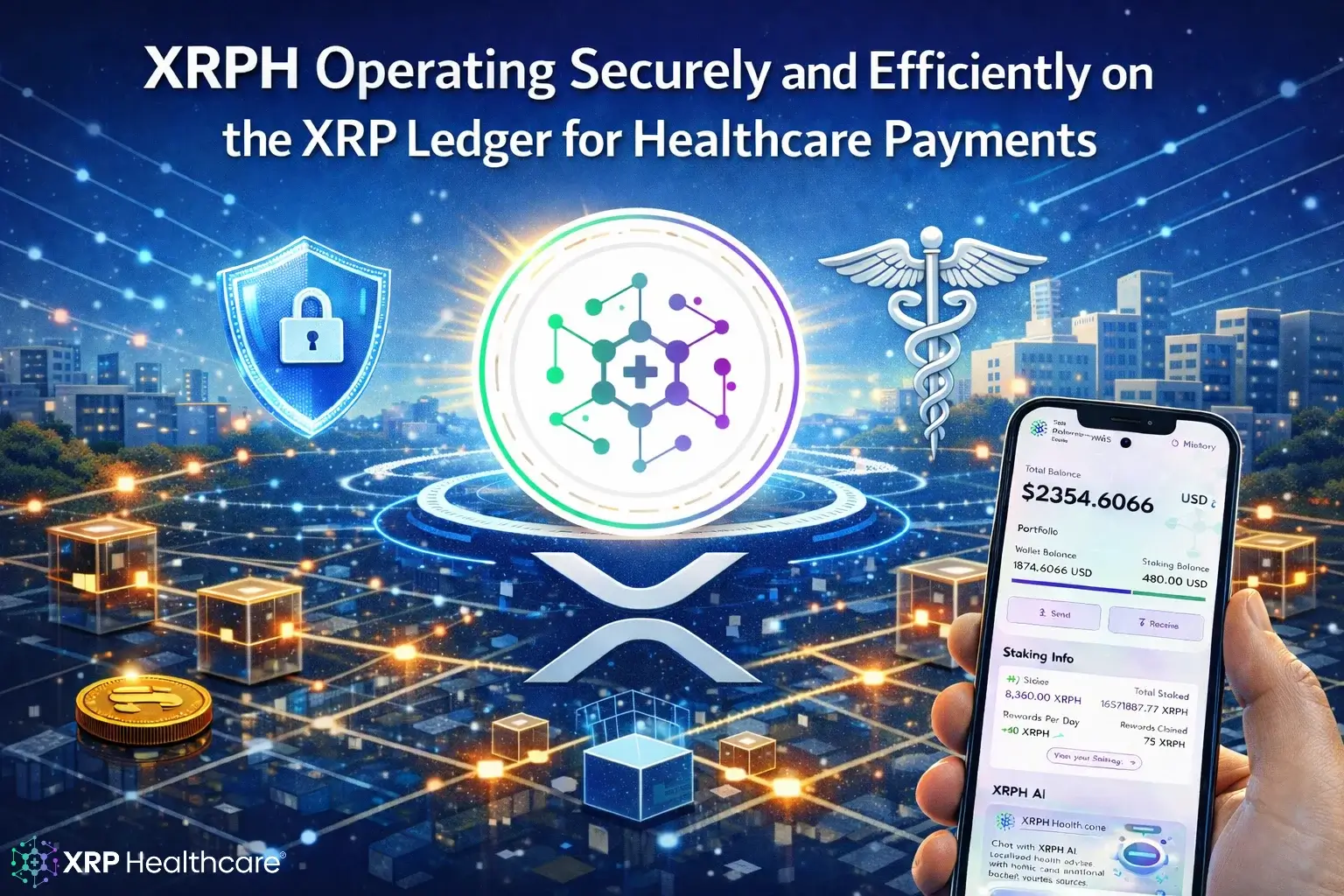
The XRPH Wallet securely holds and transfers XRPH and other XRPL assets. Being non-custodial means users retain control of their private keys, improving security posture compared to custodial solutions.
Using Wallets With XRPH
- Send and receive token payments: XRPH tokens can be securely transferred between wallets.
- Memo fields: Structured data (like invoice IDs) can be included for reconciliation.
- Integration with billing systems: Wallets can interface with healthcare financial applications for automated settlement workflows.
More about XRPH Wallet features at: https://xrphtoken.com/
Cross-Asset Support and Interoperability
The XRP Ledger enables multi-asset transactions and allows XRPH to be exchanged alongside other assets such as XRP and XRPL-based stablecoins. This interoperability enables healthcare systems to:
- Conduct multi-currency settlements
- Integrate tokenized assets with internal payment systems
- Provide flexible payment options for patients and providers
This cross-asset support helps create a more scalable and flexible bridge between traditional financial infrastructure and blockchain-native workflows.
Transparency and Auditable Trails
Blockchain transactions on the XRP Ledger are transparent and publicly verifiable. Off-chain systems may link healthcare payment details to maintain privacy, while transaction hashes, timestamps, and ledger entries exist immutably on the XRPL.
Transparent records help:
- Providers confirm receipt of funds
- Accounting teams automate reconciliation
- Auditors verify transaction history
For general insights into blockchain transparency benefits, see: Investopedia – What Is Blockchain?
https://www.investopedia.com/terms/b/blockchain.asp
Real-World Healthcare Transaction Use Cases
Automated Provider Settlements
Healthcare providers can receive XRPH payments directly into their wallets with near-instant settlement, improving cash flow and reducing reliance on slow banking processes.
Patient Payment Reconciliation
Patients paying for services can use XRPH tokens via wallet interfaces, with payments recorded immutably on the ledger, simplifying reconciliation and financial reporting.
Cross-Border Transfers
Healthcare systems that engage in international transactions, such as telemedicine and global supply chains, benefit from near-instant XRPH settlement without traditional correspondent banking delays.
Security and Compliance Considerations
It’s important to note that while XRPH transactions improve settlement transparency and speed, the XRP Ledger does not store sensitive personal health information (PHI). Payment details are cryptographic ledger entries, while patient identities and health records remain in separate, secure systems compliant with regulatory standards such as HIPAA.
Blockchain technology supports immutable financial records, but compliance workflows should still align with healthcare privacy and security frameworks.
XRPH and Traditional Financial Systems
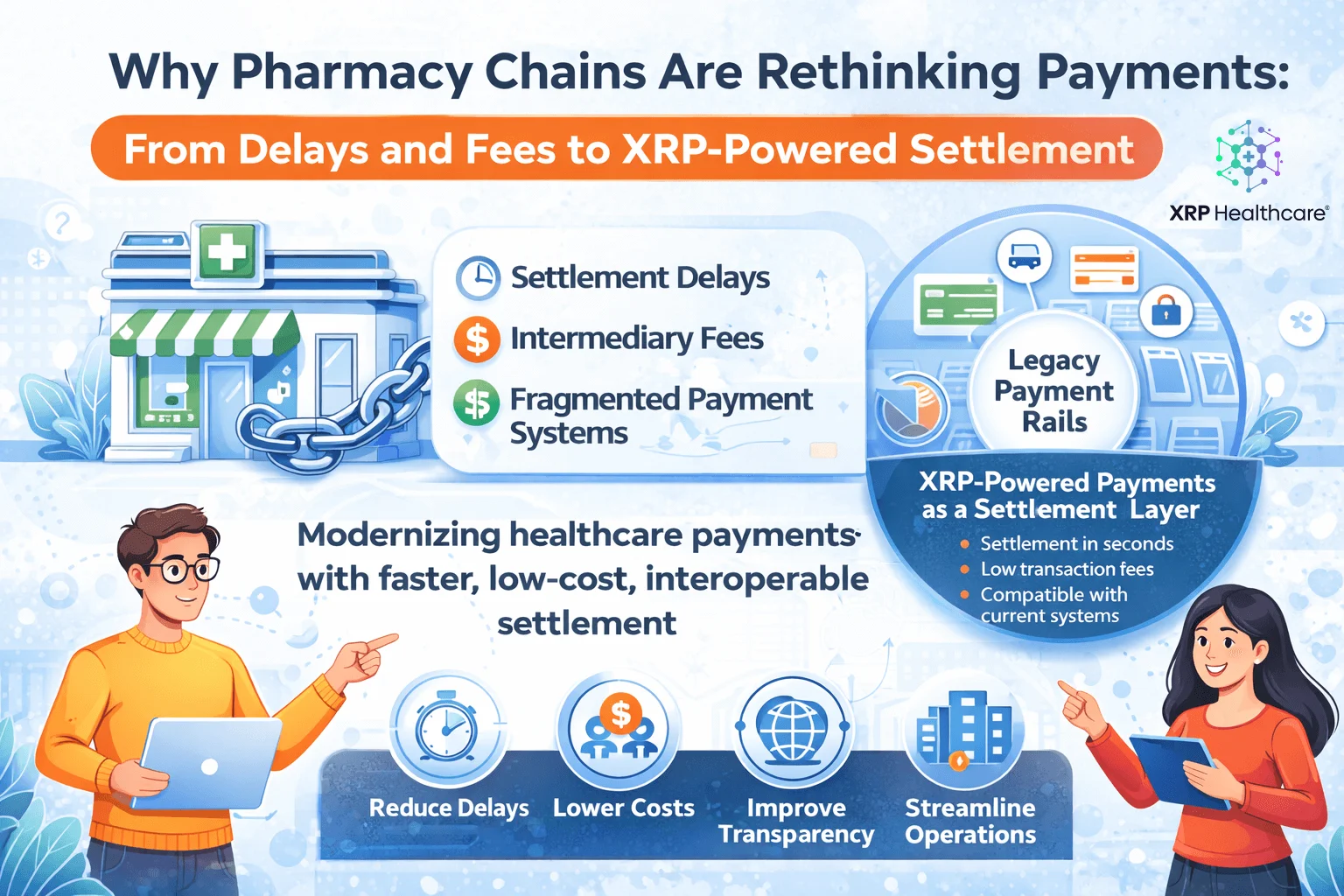
Traditional settlement systems involve banking rails, correspondent networks, and batch processing — often resulting in delayed settlement and reconciliation challenges.
In contrast:
- XRPL enables fast settlement finality
- XRPH offers predictable utility asset flows
- Decentralized consensus removes single points of failure
- Wallets provide secure, non-custodial control of tokens
This architecture supports faster, more transparent, and efficient healthcare payment workflows.
Conclusion
The **XRPH token operates natively on the XRP Ledger, leveraging its fast, low-cost, and decentralized settlement model to support real-world healthcare payments. Through decentralized validation, near-instant settlement, wallet integration, and transparent auditability, XRPH provides a practical utility layer for healthcare financial transactions.
By understanding how XRPH functions within the XRP Ledger’s infrastructure, healthcare organizations can better assess how blockchain-enabled models improve payment settlement speed, reconciliation accuracy, and financial interoperability.