Introduction
Healthcare payment systems historically rely on manual processes and legacy financial infrastructure, resulting in delayed settlements, reconciliation errors, and high processing costs. Automating these payments can significantly improve operational efficiency, reduce administrative burden, and enhance financial transparency.
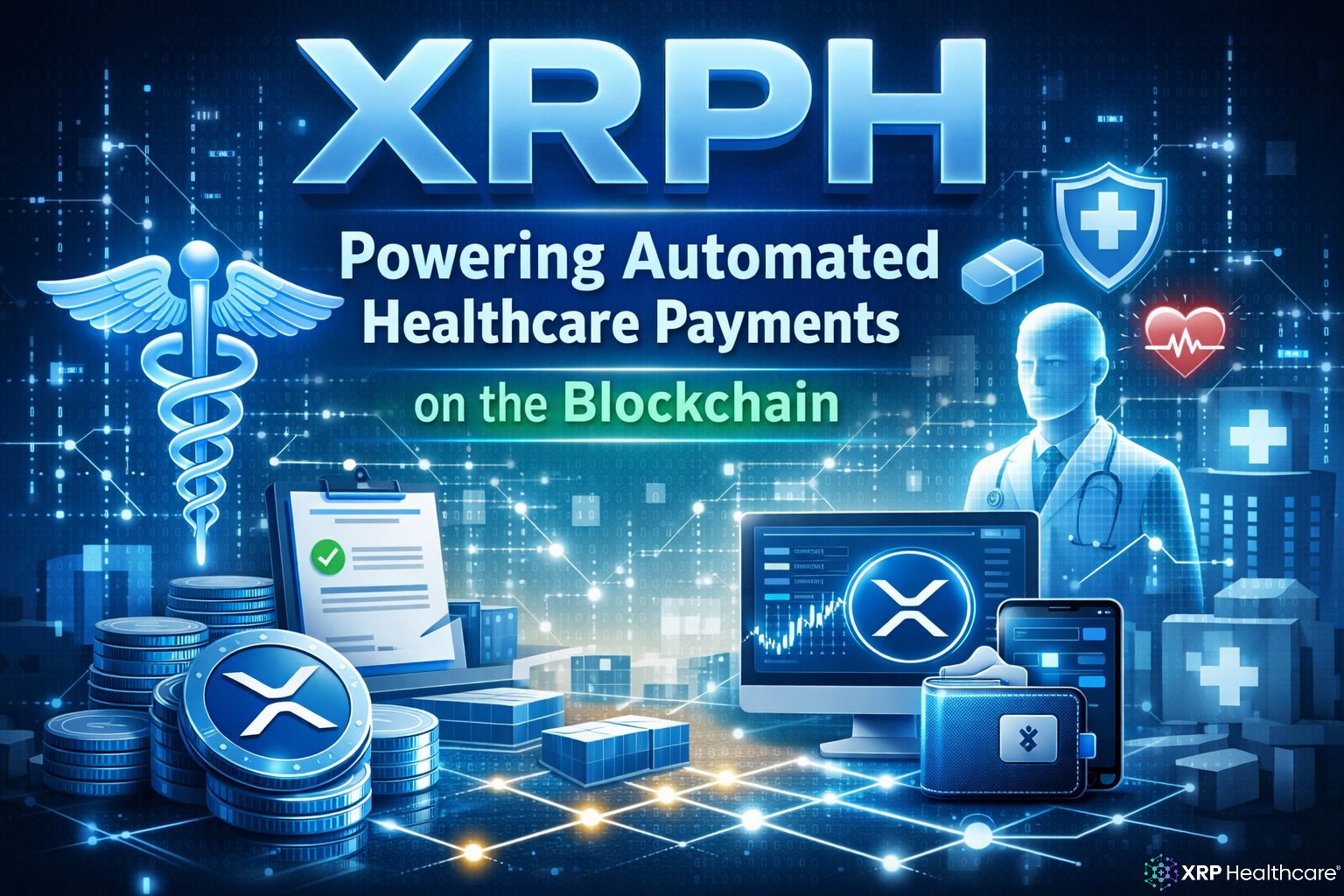
The XRPH token, built on the XRP Ledger (XRPL), plays an important role in enabling payment automation within healthcare systems. By leveraging blockchain’s speed, security, and transparency, XRPH supports automated workflows that enhance how healthcare organizations manage transactions from patient billing to supplier settlements.
This article explores how XRPH contributes to payment automation in healthcare, real-world use cases, and the benefits of integrating this blockchain solution.
What Is Payment Automation in Healthcare?
Payment automation refers to the use of technology to manage and execute financial transactions without manual intervention. In healthcare, this includes:
- Patient billing and collections
- Provider and supplier settlements
- Reconciliation between accounting systems
- Cross-border financial transfers
According to the Healthcare Financial Management Association (HFMA), automation technologies can reduce administrative overhead and improve financial performance in healthcare systems. (Source: HFMA https://www.hfma.org)
How Blockchain Supports Healthcare Payment Automation
Blockchain technology enhances payment automation by leveraging:
- Immutable ledgers that securely record every transaction
- Smart references and metadata that automate reconciliation
- Decentralized consensus for trustless validation
- Programmable workflows that reduce manual intervention
These features help transform traditional batch-based processing into streamlined, automated payment flows.
To explore how blockchain is used across industries, including healthcare, see: Investopedia Blockchain Use Cases (https://www.investopedia.com/terms/b/blockchain.asp)
The XRP Ledger and Its Role in Payment Automation
The XRP Ledger (XRPL) is optimized for high-speed, low-fee financial transactions, making it suitable for automated payment systems in healthcare.
Key characteristics of XRPL include:
- Fast settlement: Transactions confirm in seconds
- Low costs: Minimal network fees
- Scalability: High throughput for enterprise usage
- Multi-asset support: Native tokens and stable assets
These features support automated workflows by eliminating traditional financial bottlenecks that slow down settlement and reconciliation. (Source: XRPL Official Docs https://xrpl.org)
How XRPH Enables Payment Automation
Faster, Predictable Healthcare Settlements
XRPH transactions settle quickly on the XRP Ledger, enabling automated systems to complete payments without waiting for hours or days. This leads to:
- Improved cash flow
- Reduced payment latency
- Greater predictability for planning and budgeting
Automated payment systems can trigger settlement events immediately once predefined conditions (such as service completion or claims approval) are met.
Integrated Billing and Ledger Metadata
One of the core strengths of blockchain is the ability to include structured metadata with transactions. Healthcare systems can embed:
- Invoice IDs
- Patient account references
- Service codes
This enables automated reconciliation, where matching between billing systems and transaction records happens programmatically rather than manually.
Reducing Manual Intervention and Errors
Manual payment processing introduces errors, delays, and inefficiencies. XRPH-enabled automation pairs blockchain immutability with standardized workflows to ensure:
- Fewer reconciliation mismatches
- Lower risk of duplicate payments
- Clear audit trails for financial compliance
This helps accounting teams focus on exceptions rather than routine processing.
Facilitating Cross-System Workflow Triggers
Automated payments require triggers, like service completion, claims approval, or inventory movements, to initiate settlement. With blockchain automation:
- Trigger events in one system can automatically invoke payment transactions on XRPL
- Smart ledger entries can flag payment status updates in real time
- Workflow systems stay synchronized without manual reconciliation
This improves responsiveness and accuracy across departments.
XRPH Wallet and Automated Transactions
The XRPH Wallet supports secure, non-custodial storage and movement of XRPH and compatible assets. It is designed for healthcare payment activity where automation plays a key role.
How the Wallet Supports Automation
- Programmable API access: Enables integration with healthcare billing software
- Secure key control: Users retain ownership of private keys
- Multi-asset handling: Supports XRPH alongside XRP and stable assets
- Audit-friendly records: Ledger entries can be accessed for automated reporting
This makes the XRPH Wallet an effective tool for automated payment workflows, serving patients, providers, and accounting systems alike.
Real-World Use Cases for Payment Automation
Patient Billing Automation
Healthcare providers can automate patient billing, issuing invoices that trigger XRPH transactions upon payment confirmation. This improves accuracy and reduces the administrative burden on billing departments.
Supplier and Vendor Payments
Large healthcare organizations often engage multiple vendors for pharmaceuticals, medical supplies, and services. Automation enables scheduled or conditional payments when contract terms are met, without manual processing.
Cross-Border Healthcare Transfers
For international services, such as telemedicine or global supplier settlements, XRPH-enabled automation reduces delays and foreign exchange complexity by leveraging fast, borderless settlement.
Security, Compliance, and Transparency
Blockchain automation enhances transparency across financial workflows, creating immutable records that support auditing and compliance. However, it is essential to acknowledge that blockchain does not supersede existing regulatory frameworks, such as HIPAA. Instead, automation complements compliance by improving traceability and data integrity.
For broader insights into blockchain and healthcare, see: Blockchain and Healthcare Research https://arxiv.org/abs/1812.02776
XRPH Versus Legacy Automation Systems
Unlike legacy automation, which often depends on batch processing and manual oversight, XRPH-based automation:
- Enables real-time settlement
- Reduces intermediary dependency
- Improves reconciliation accuracy
- Lowers operational costs
This positions blockchain automation as a next-generation solution for healthcare financial systems.
Conclusion
Payment automation is essential for modern healthcare systems to achieve efficiency, accuracy, and transparency. The XRPH token, supported by the XRP Ledger, provides the technological foundation for automated financial workflows across patient billing, provider settlements, supplier payments, and cross-border transactions.
By combining fast settlement, structured metadata, and automated reconciliation, XRPH empowers healthcare organizations to reduce costs, accelerate workflows, and minimize manual intervention, ushering in a more efficient and responsive financial ecosystem.