What Is a Blockchain Pharmacy Chain?
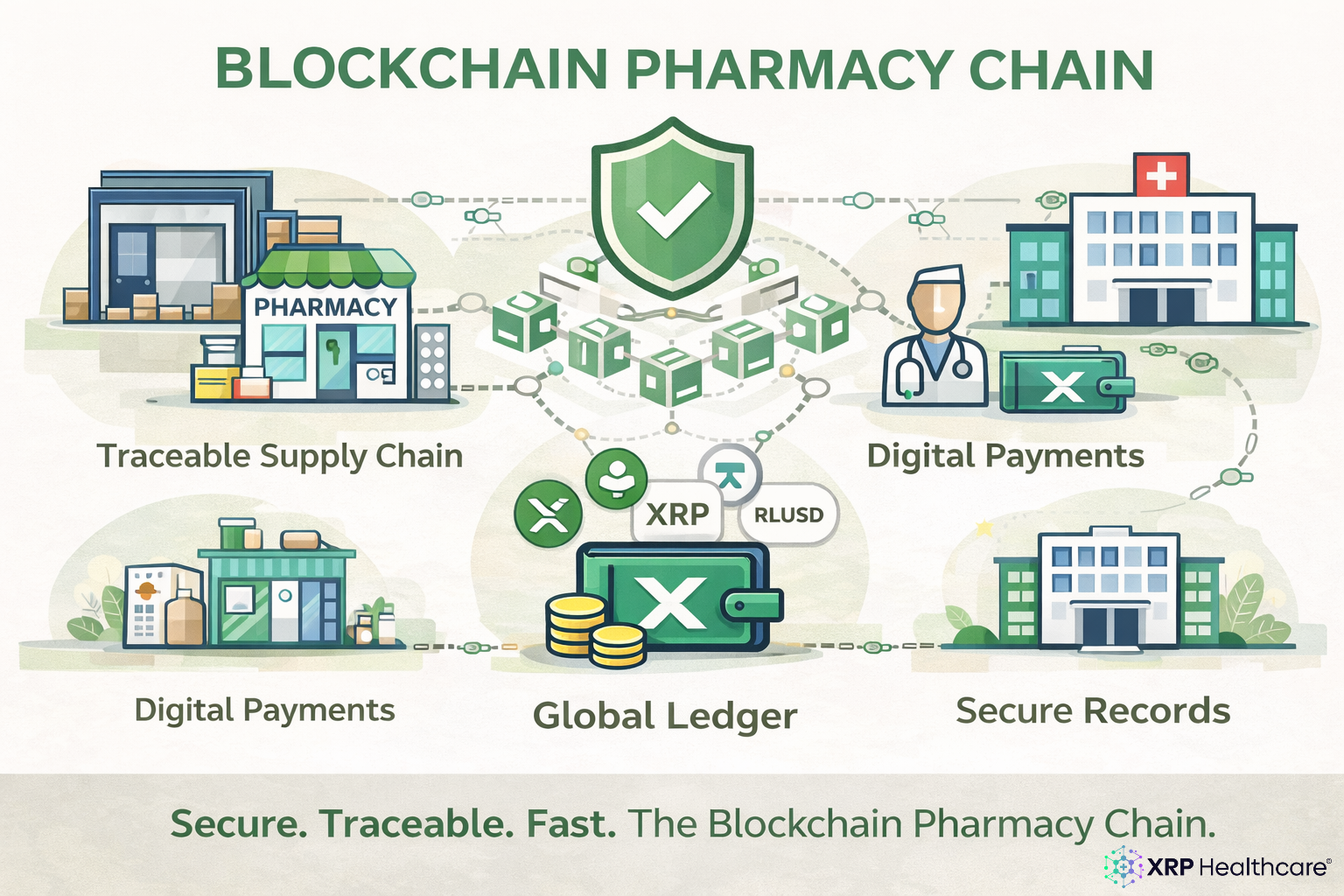
A Blockchain Pharmacy Chain is a network of pharmacies, clinics, suppliers, and distributors that use blockchain technology to track, verify, and settle transactions across the pharmaceutical ecosystem. In this model, every step, from drug production to patient delivery, is recorded on a decentralized, tamper-proof ledger. This improves transparency, traceability, and security in the flow of medicine and payments. (chaincodeconsulting.com)
Blockchain can help prevent counterfeit drugs, improve inventory management, and enable secure digital payments across pharmacy networks.
How Blockchain Helps Pharmacy Chains
Enhanced Traceability & Safety
In a blockchain system, each movement of drugs or medical supplies is timestamped and recorded across all participants. This means pharmacies can trace a medicine’s path from manufacturer to shelf, reducing risks of counterfeit products and ensuring quality control.
Immutable records also help with recalls, audits, and regulatory compliance.
Faster & Secure Payments
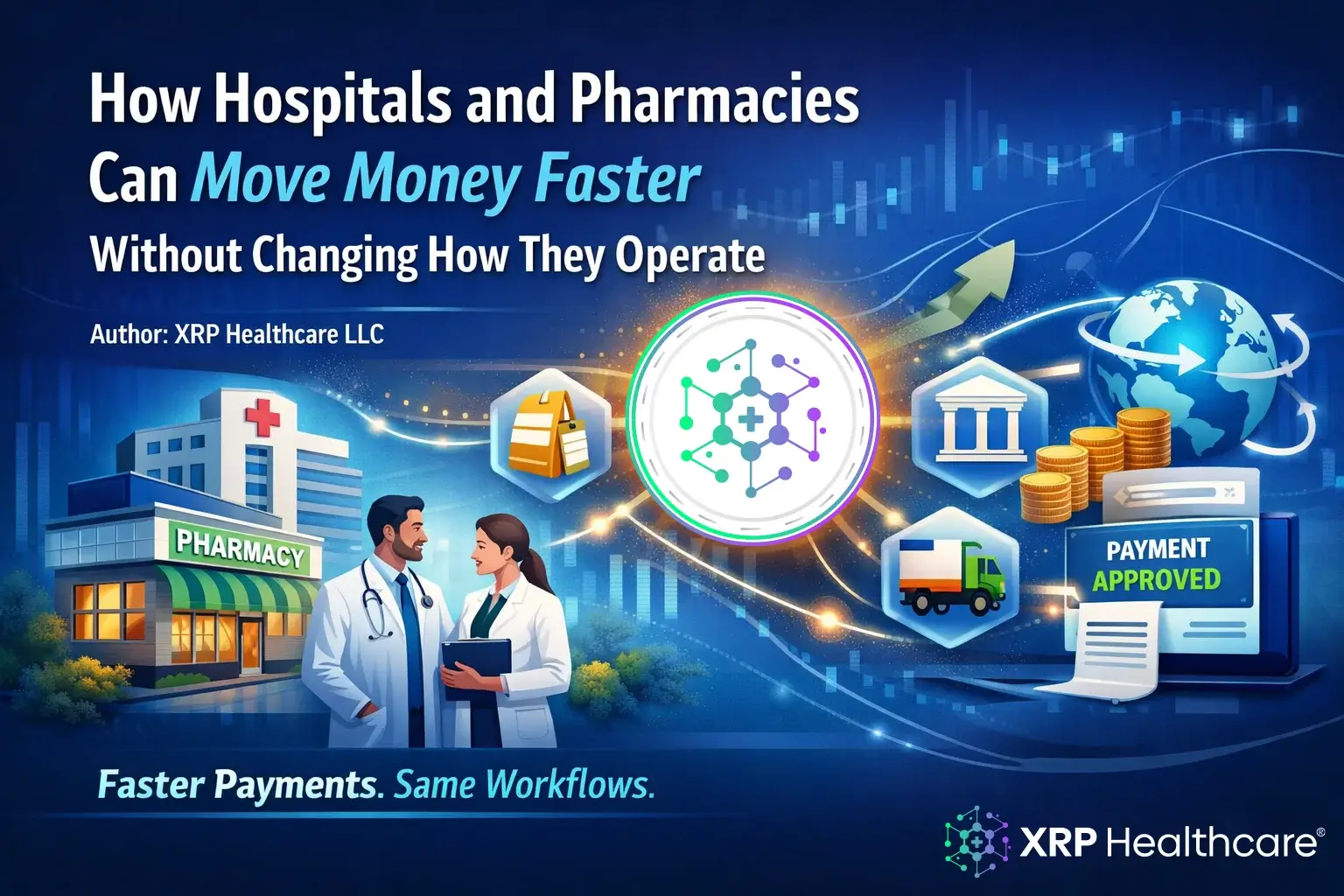
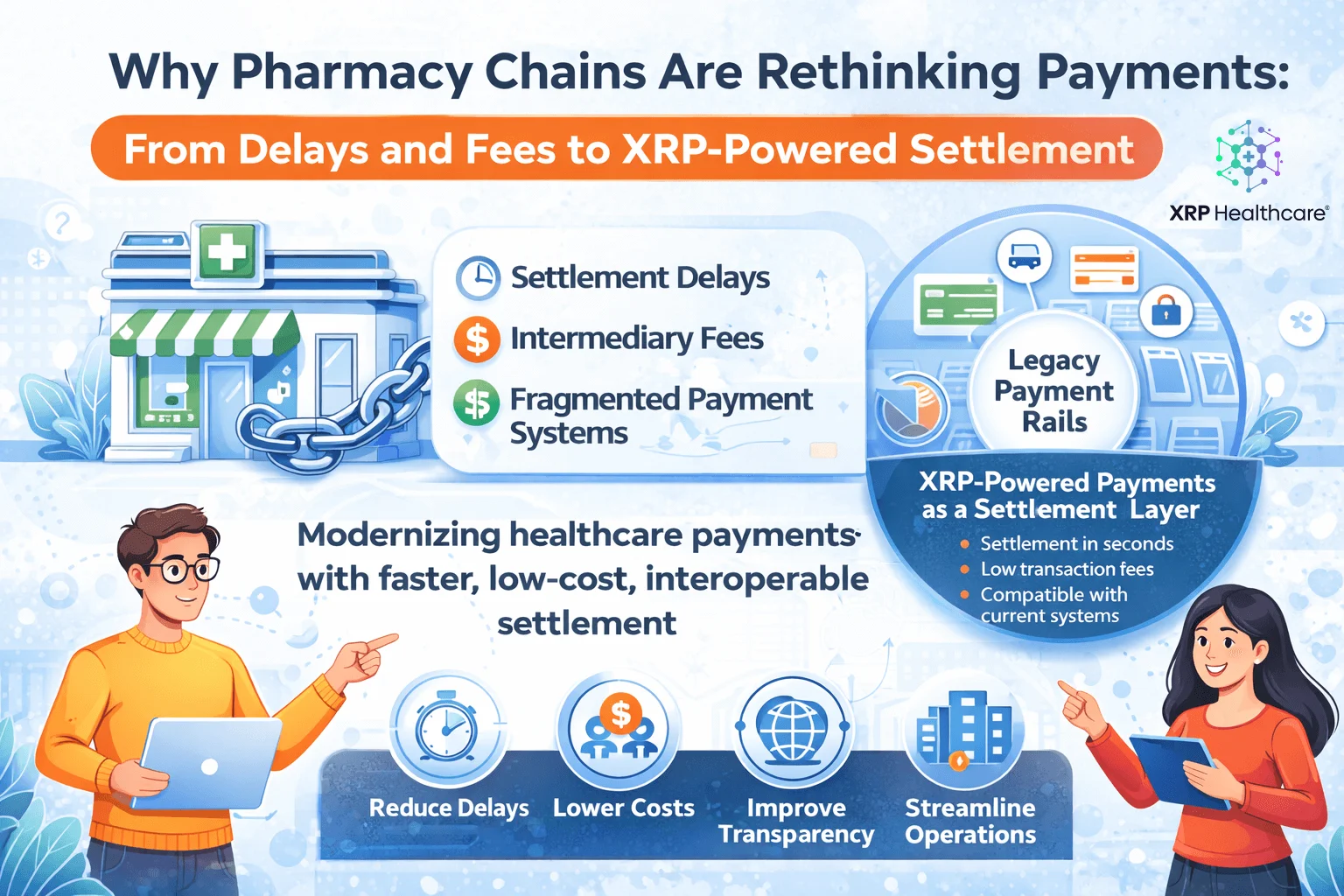
Traditional pharmacy payment systems often involve banks or intermediaries that charge high fees and cause settlement delays.
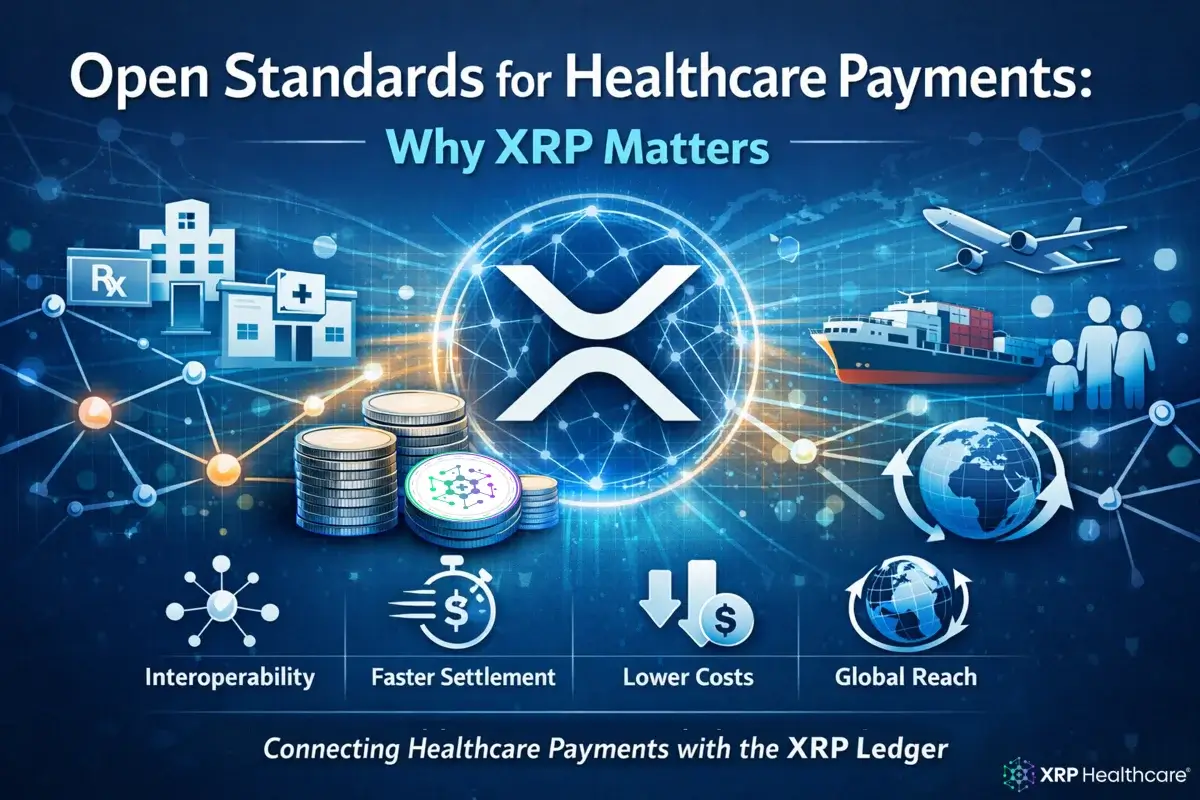
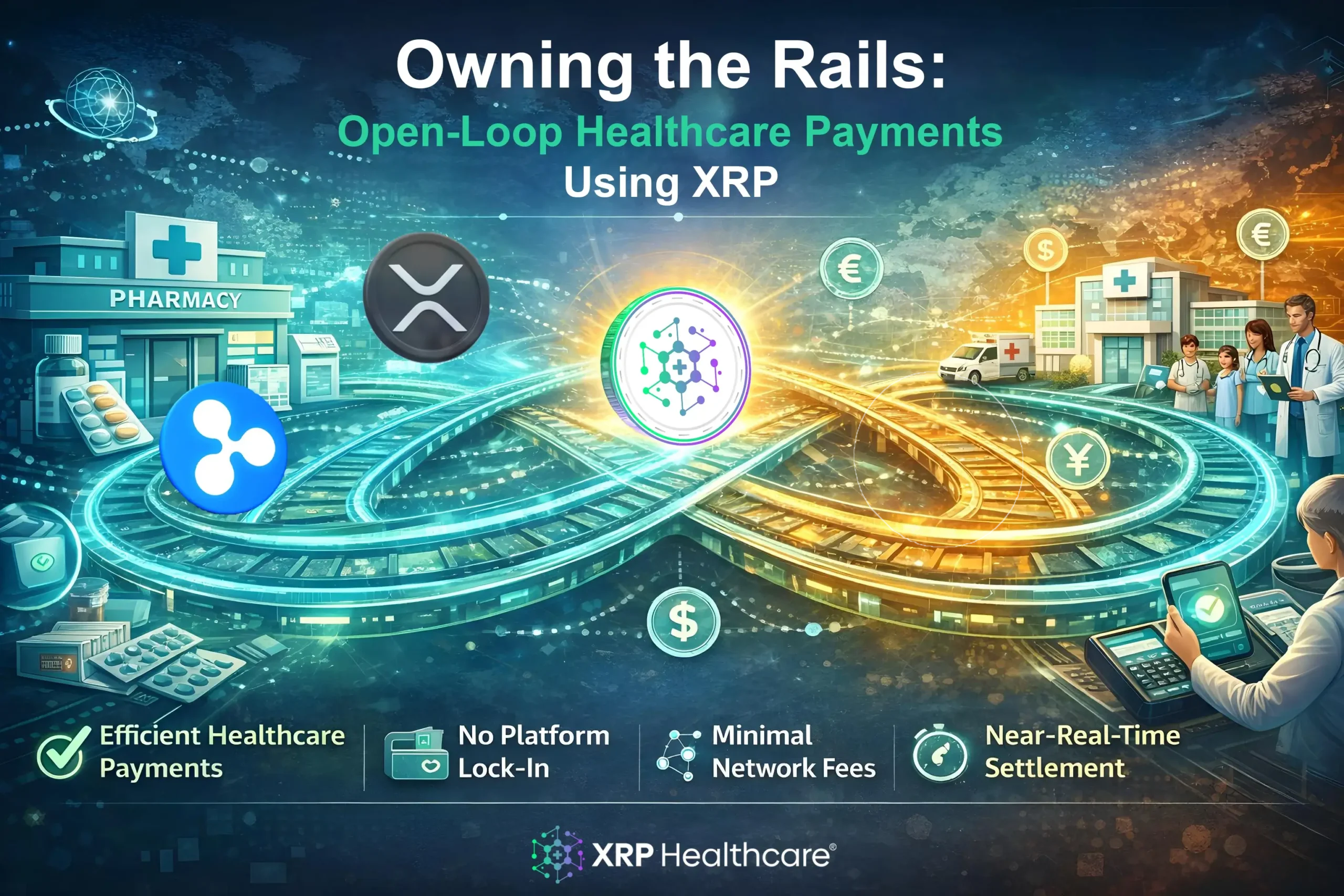
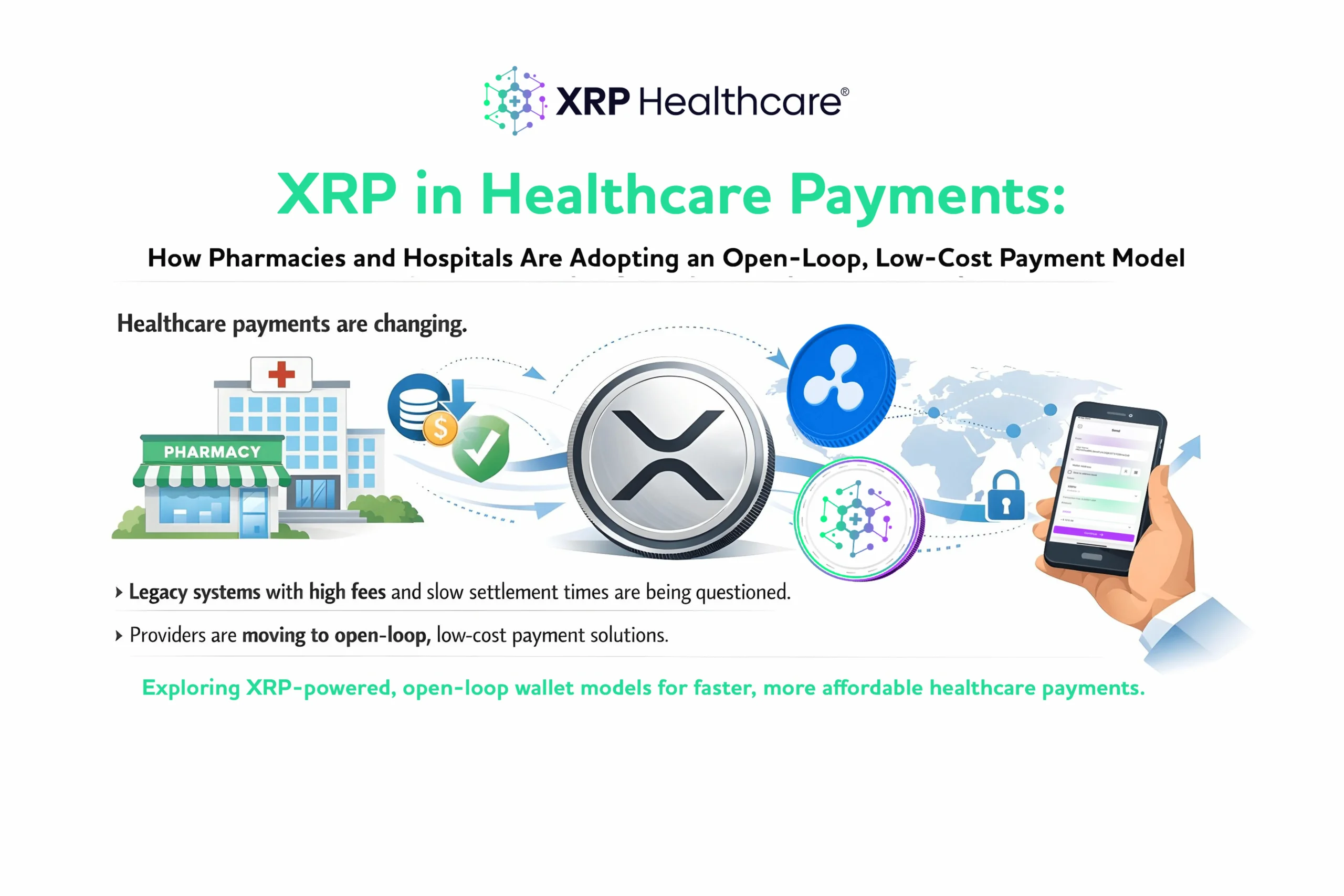
Blockchain solutions, such as XRPH Wallet on the XRP Ledger, allow near-instant, low-cost payments between pharmacies, clinics, suppliers, and patients. (world.einnews.com)
Using XRP, XRPH, and stablecoins like RLUSD, participants in a blockchain pharmacy chain can settle invoices in 3–5 seconds with minimal costs. (world.einnews.com)
This reduces operational friction and improves liquidity across the network.
Secure, Decentralized Records
Blockchain distributes data across many nodes, reducing the risk of central server hacks or data loss.
This decentralized design provides robust security and enhances patient privacy, especially important in healthcare environments.
Real World Examples & Adoption
XRPH Wallet for Pharmacy Chains
The XRPH Wallet, developed by XRP Healthcare LLC, is an open-source, non-custodial mobile payment solution built on the XRP Ledger. It enables pharmacies, clinics, and distributors to send and receive instant payments in XRP, XRPH, and RLUSD, offering cost-effective settlement for healthcare transactions worldwide. (PR Newswire)
This wallet is designed with a HIPAA-grade approach where no protected health information is stored on XRPH servers, making it suitable for regulated healthcare payment use cases. (XRP Healthcare LLC)
The XRPH Wallet’s transparency and speed support pharmacy chains that need to reconcile large volumes of cross-border invoices and retail payments quickly.
Benefits of a Blockchain Pharmacy Chain
- End-to-end visibility: Every product and payment event is logged on a shared ledger. (chaincodeconsulting.com)
- Fewer intermediaries: Reduced reliance on banks lowers settlement costs and delays.
- Counterfeit prevention: Digital records help verify drug authenticity at each step. (Crisis Communication Journal)
- Improved compliance: Immutable logs simplify audits and regulatory reporting. (chaincodeconsulting.com)
- Smart contracts: Automated execution of orders or payments upon meeting predefined conditions. (bsetec.com)
Challenges & Considerations
Integration with Legacy Systems
Pharmacy chains often rely on outdated software for billing, inventory management, and logistics. Integrating blockchain solutions with existing systems can be a challenging task that requires significant effort and technical expertise.
Regulatory Landscape
Healthcare and pharmaceutical systems are tightly regulated. Blockchain implementations must align with local laws for data privacy, drug tracking, and payment settlements.
Adoption & Education
For widespread use, pharmacies, suppliers, and regulators need education on blockchain’s benefits and best practices. Trust and awareness are key to adoption.
Conclusion
A Blockchain Pharmacy Chain uses decentralized ledger technology to make pharmacy networks faster, more secure, and more transparent. By adopting tools like the XRPH Wallet and blockchain-based tracking systems, pharmacies can reduce payment friction, enhance drug safety, and improve operational efficiencies, ultimately benefiting patients and healthcare providers alike.